Directed by Eiichi Kudo
To my astonishment 13 Assassins currently has four reviews on IMDb.1 I’m sorry but that’s just wrong. A classic movie deserves better than four paltry reviews.
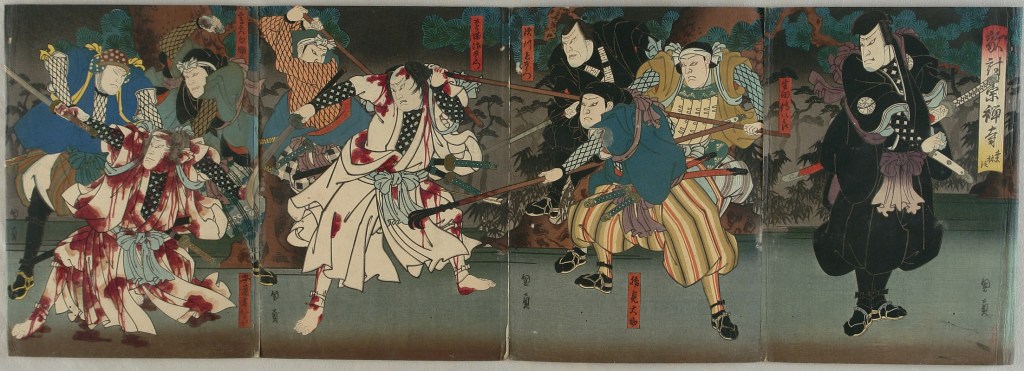
One of the purposes of my blog is to introduce people to films like this. Another is the opportunity to share my love of ukiyo-e, the prints that accompany my posts. 13 Assassins is an original story so the images I have chosen for it are intended as atmosphere rather than illustrations.
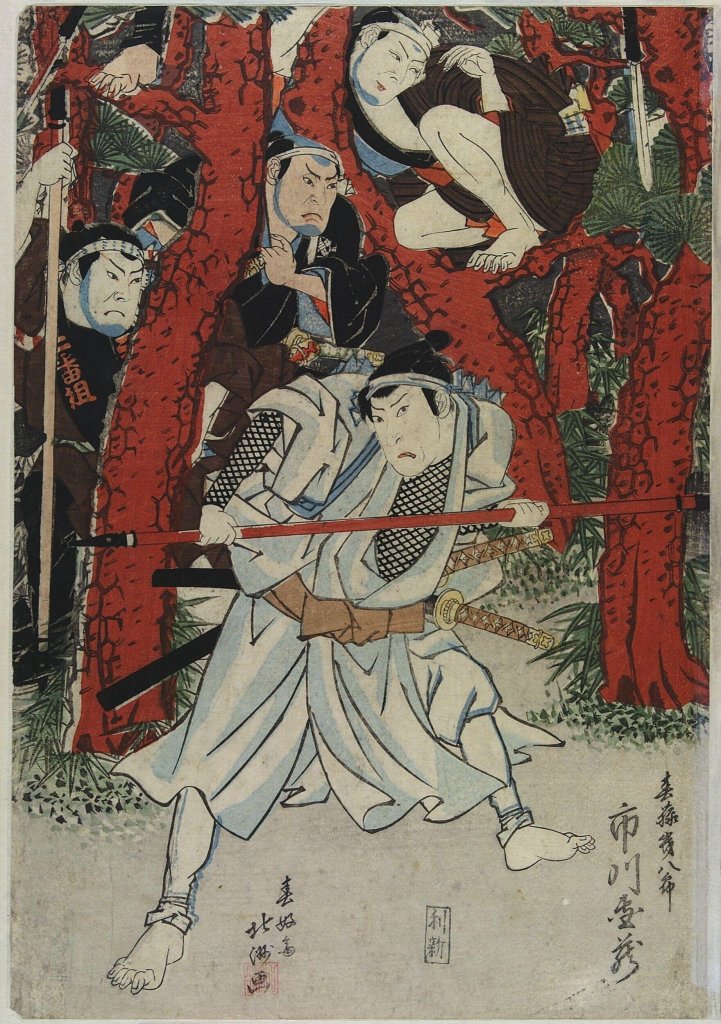
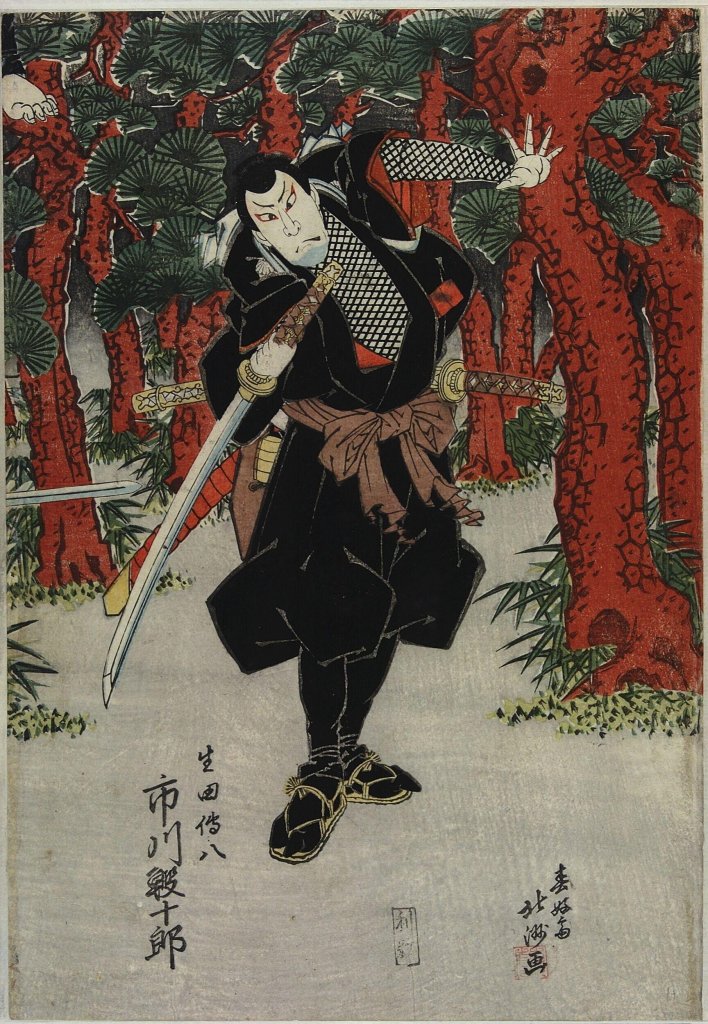
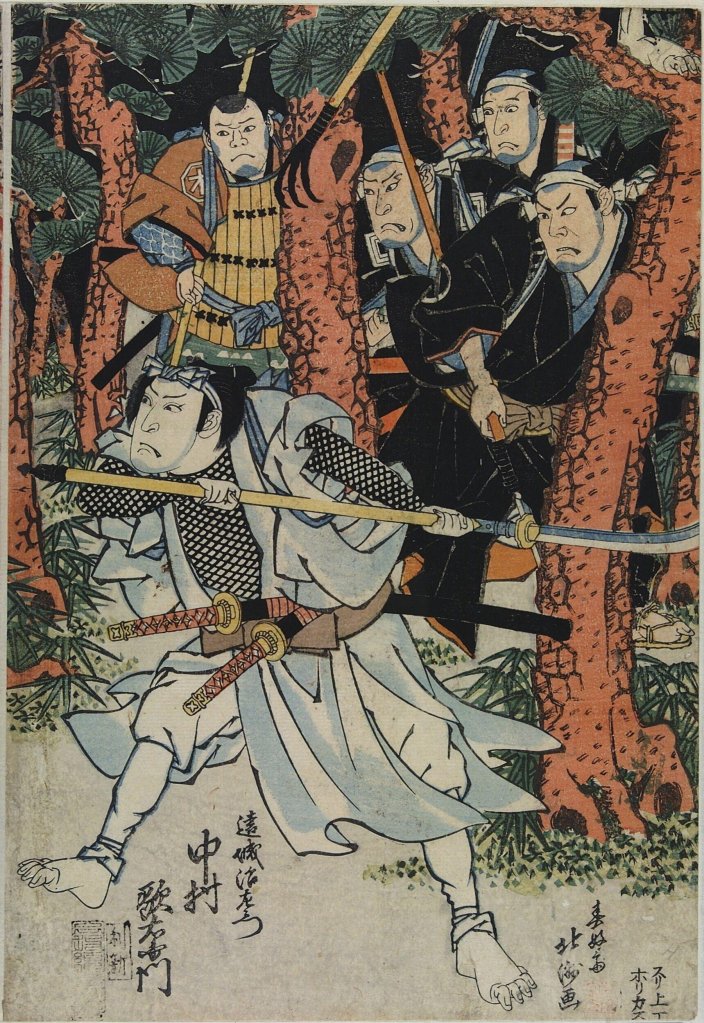
Like the movie that was the topic of my previous post, 13 Assassins features a toxic daimyō. It takes place hundreds of years later in 1844 as the samurai era was drawing to a close. The film has an elegiac air, aided greatly by cinematographer Jūhei Suzuki’s moody monochrome.
13 Assassins also represents a valediction of sorts for its leading man, Chiezō Kataoka. At age 60 Chiezō was winding down the action star portion of his career. He doesn’t do much fighting in 13 Assassins. That must have disappointed his fans, and the film did not do well at the box office during its original release.
Yet Chiezō gives one of his best performances in this, playing a samurai who is weary of violence. As Chiezō aged he began to explore beyond the confines of his film persona. In one movie his character actually gets to fall in love and have a romantic relationship, as happens in Chiezō’s 1961 film Ishin no kagaribi, which I reviewed here. The year before that he made Yōtō monogatari: hana no Yoshiwara hyakunin-giri (A Killing in Yoshiwara) with director Tomu Uchida, who had directed Chiezō previously in the Dai-bosatsu tōge trilogy. I haven’t reviewed A Killing in Yoshiwara yet because I’m still traumatized by it. Suffice to say that Chiezō does the most un-Chiezō things imaginable.
In 13 Assassins Chiezō plays Shinzaemon Shimada. Shinza is a metsuke, an inspector akin to a senior intelligence officer charged with oversight of internal government affairs. He is also a hatamoto, a direct retainer of the shogun.
Shinza is asked to put together a team to eradicate a sadistic nobleman whose violent behavior is becoming increasingly out of control. The problematic daimyō is the shogun’s half-brother Matsudaira Naritsugu (Kantarō Suga). The film opens with a shot of Naritsugu’s retainer who has committed suicide on the grounds of Doi Toshitsura’s estate in order to draw attention to Naritsugu’s appalling conduct. Doi Toshitsura is rōjū, Chief Councilor under the Edo shogunate. The shogun has ordered that Toshitsura and the other elders do everything they can to settle this matter quietly.
Naritsugu has already been promoted to the post of senior advisor. A disturbed person in such a powerful position could destabilize the government. Naritsugu is so high up in the feudal hierarchy that getting rid of him is a suicide mission, and one that must be carried out in the utmost secrecy. Shinza accepts the job, knowing that this will be the final service he can render to the shogun.
Japanese films do bad guys better than anyone else. They really know how to crank up the hate-worthiness, and the villain in 13 Assassins is particularly vile. Shinza meets with Yukie Makino (Ryūnosuke Tsukigata, playing a good guy this time), a samurai retainer of the Owari clan who relates a horrifying story. During a visit to the Owari domain Naritsugu raped Makino’s daughter-in-law Chise and murdered his son. Chise then committed suicide. Devastated by the loss of his family, Makino desires nothing more than to die, but he wants to stay alive long enough to ensure that Naritsugu is made to pay for his crimes.
Shinza is frenemies with Naritsugu’s retainer Hanbei (Ryōhei Uchida). Hanbei hates working for a depraved psycho but is bound by an archaic code that demands total loyalty and subservience to one’s lord. His job is to clean up the mess his deranged boss leaves behind. While Naritsugu’s a coward, Hanbei and the samurai who serve under him aren’t, and they outnumber Shinza’s team of assassins by a considerable margin.
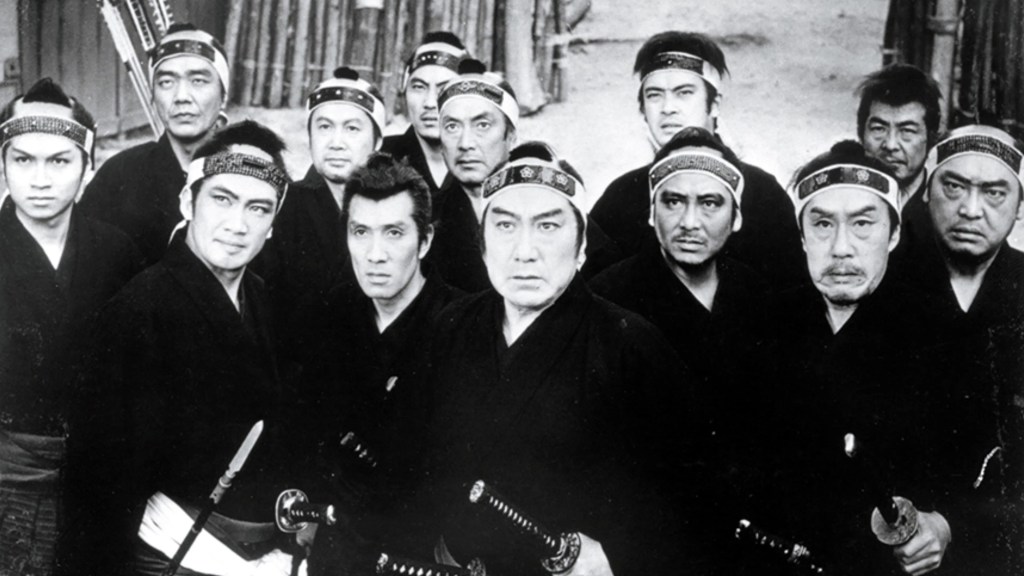
The assassination squad is small in number yet diverse, comprising high-ranking samurai and humble rōnin. Shinza warns them that their mission is like a chess game: they have only one chance to take the king. They can’t risk making a move until they’re sure of succeeding.
© Toei Company, Ltd.
Shinza and his team devise an ingenious plan realized in the film’s famous set piece which turns an entire village into an elaborate— and lethal— trap.

I love that the samurai hit squad has a wide range of ages. Shinza’s dissolute young nephew Shinrokurō (Kōtarō Satomi) is reluctant to join at first but ends up fighting beside his uncle. Kanjūrō Arashi, who plays Shinza’s second-in-command Kuranaga, was born in 1902. Kanjūrō started his acting career as an onnagata in Kabuki. Like Chiezō he was a longtime veteran of jidaigeki films, and he absolutely kills it in this.2

© Toei Company, Ltd.
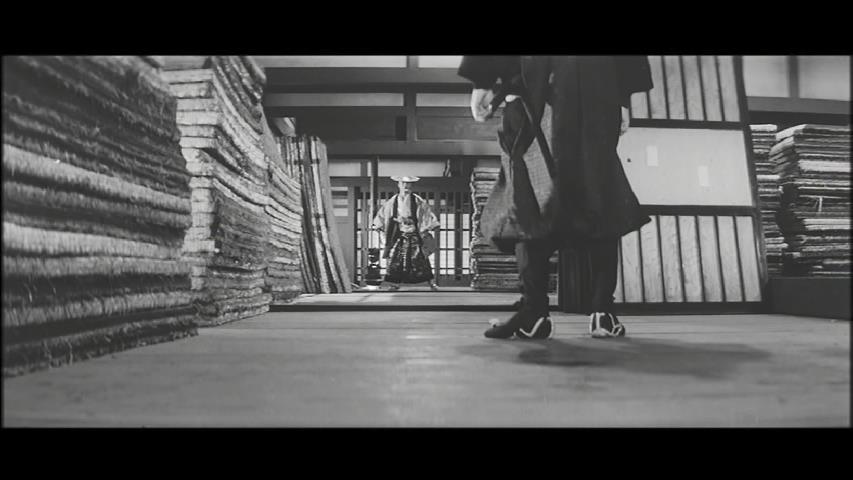
Speaking of killing, check out this iconic shot of Shinza locked in on his target:
© Toei Company, Ltd.
Chiezō’s takedown of the loathsome bad guy is so delicious I immediately hit rewind so I could enjoy it again. It’s the best scene in the whole movie, and very much worth the wait.
Admittedly it’s a long wait. Samurai films tend to be slow burns with explosive endings. The 1962 version of Chūshingura is one of my favorite films ever. It’s almost four hours long but it’s so immersive and compelling that it doesn’t feel like it. 13 Assassins runs slightly over two hours and it tried even my patience. That’s a pacing problem. There are multiple scenes of Men Having Meetings, which as I have mentioned before is a phenomenon endemic to Japanese historical dramas. This is how they handle exposition. Yes, it’s clunky and talky, but it’s part of the genre. The last half hour of 13 Assassins is nonstop action and includes some inventive nouvelle vague-style handheld camera work.
13 Assassins ends on a bleak note. There are no victors— just survivors. By now you may have noticed an emerging theme in the movies I review: the life of a samurai is not all that great. Like Shinza says: “Being a samurai is a helpless job.”
- Takashi Miike’s 2010 remake of 13 Assassins has nearly 200 reviews on IMDb. The 1963 film fares better over on Letterboxd. It has numerous reviews, although opinion appears divided regarding which version is superior. ↩︎
- If Google Translate has rendered his highly entertaining entry in the Japanese edition of Wikipedia into English correctly, Kanjūrō belonged to the same Kabuki troupe as Utaemon Ichikawa and Kazuo Hasegawa (both of whom figure prominently in my blog), and later shared a dressing table in another Kabuki troupe with Chiezō (about whom I have made my feelings plain). ↩︎

 Ukiyo-e Owl
Leave a comment