Directed by Hiroshi Inagaki
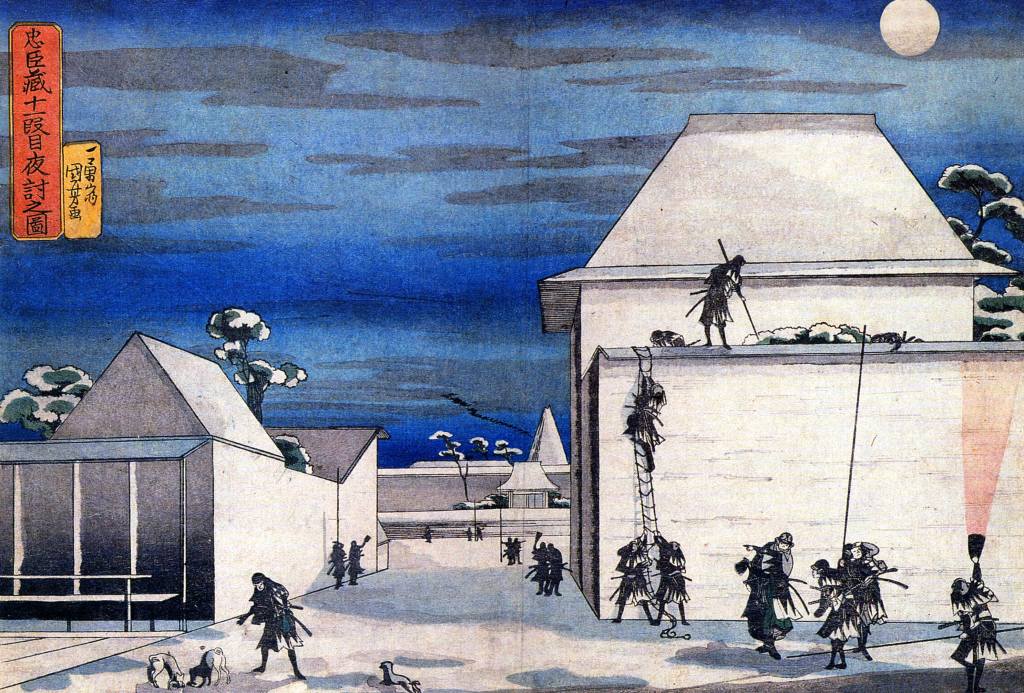
The end of the year approaches, and with it all the usual holiday stress. Escape with me now to 18th century Japan, a world of grace and beauty, honor and courage. This is the world of Chūshingura.
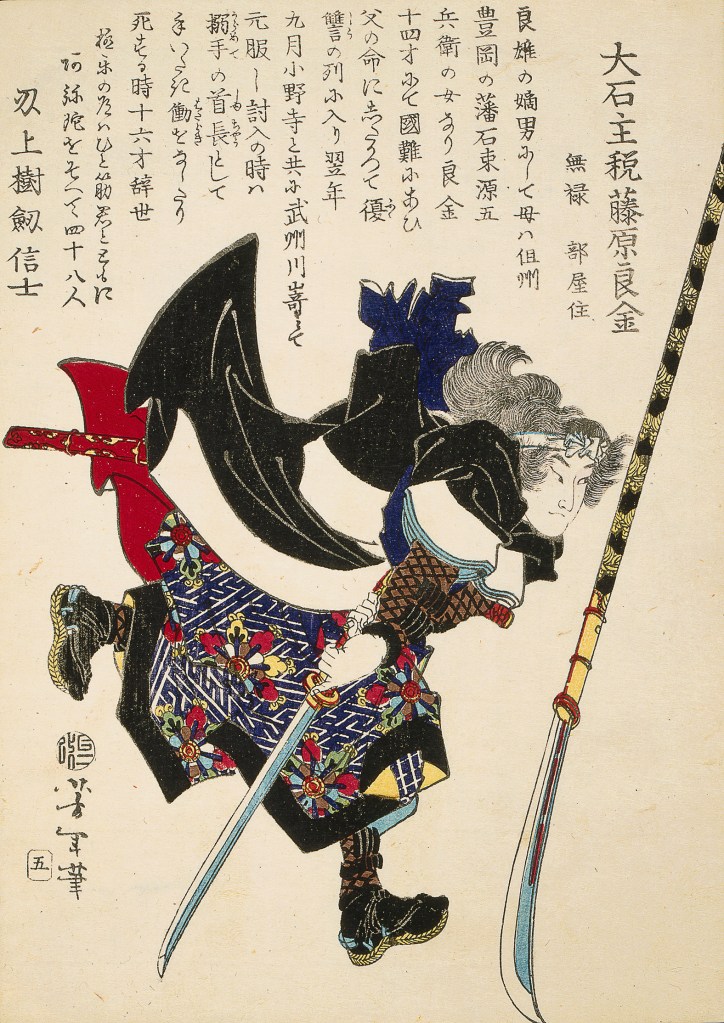
Originally a bunraku play based on real events, Chūshingura (‘The Treasury of Loyal Retainers’) is one of the major plays in Kabuki and a popular subject for ukiyo-e as well as film and television. December is Chūshingura season in Japan, and I can’t think of a better way to celebrate it than writing about one of my favorite movies.
Inagaki’s version of this classic tale of loyalty and revenge is truly epic in scale. Shot in widescreen TohoScope, it has a huge cast of what appears to be every actor under contract to Toho Studios at the time (a number of wonderful Kabuki performers among them) and is over three hours long. The direction is always perfectly controlled, however, and it’s so stunning to look at and so immersive in feel that you don’t notice the runtime. In fact you may find yourself wishing, as I did, to stay even longer in its fascinating universe.
The plot is relatively straightforward albeit with an immense cast of characters. Part of the fun for Chūshingura enthusiasts like me is the countless variations you can spin off from it, following various characters on their own narrative journeys.
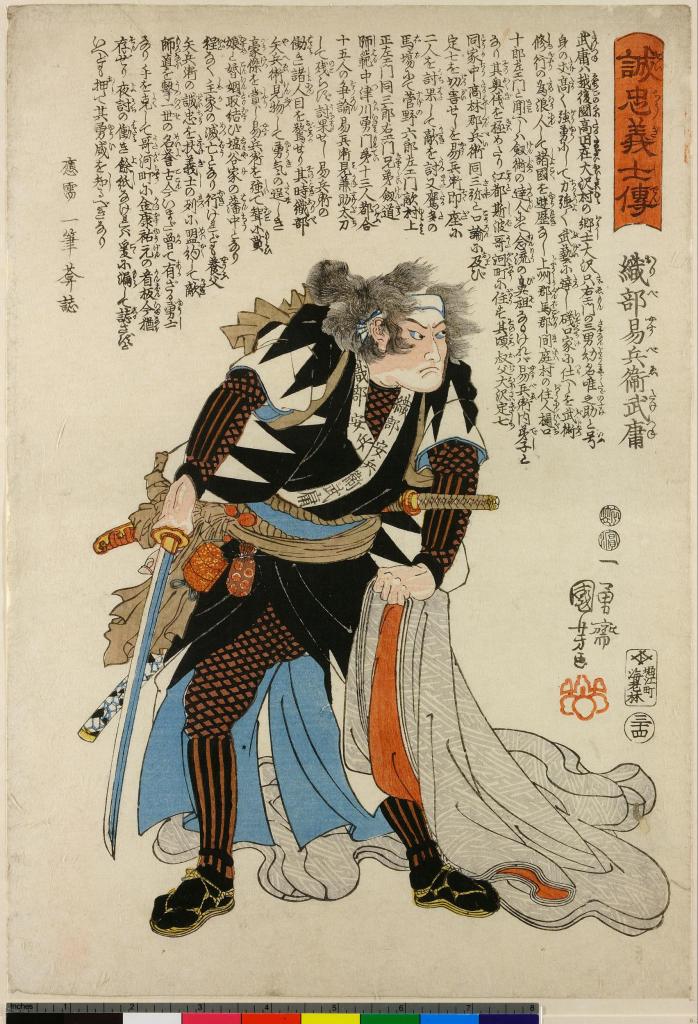
© The Trustees of the British Museum.
Shared under a Creative Commons Attribution –
Non-Commercial – ShareAlike 4.0 International (CC BY-NC-SA 4.0) licence.
Every version has something different to offer and everyone will have his or her own favorite, but of all the Chūshingura films I have seen to date Inagaki’s iteration provides the best overall introduction. If you are brand new to this story I recommend watching this one first. For clarity I’m leaving out the subplots, but the main storyline is easy to follow, and roughly goes like this: the young daimyō of Akō, Lord Asano (Yūzō Kayama), endures a series of insults and humiliations at the hands of the malicious court official Lord Kira (Chūsha Ichikawa VIII). Lord Asano snaps under the strain. He attacks and wounds Kira inside Edo Castle.
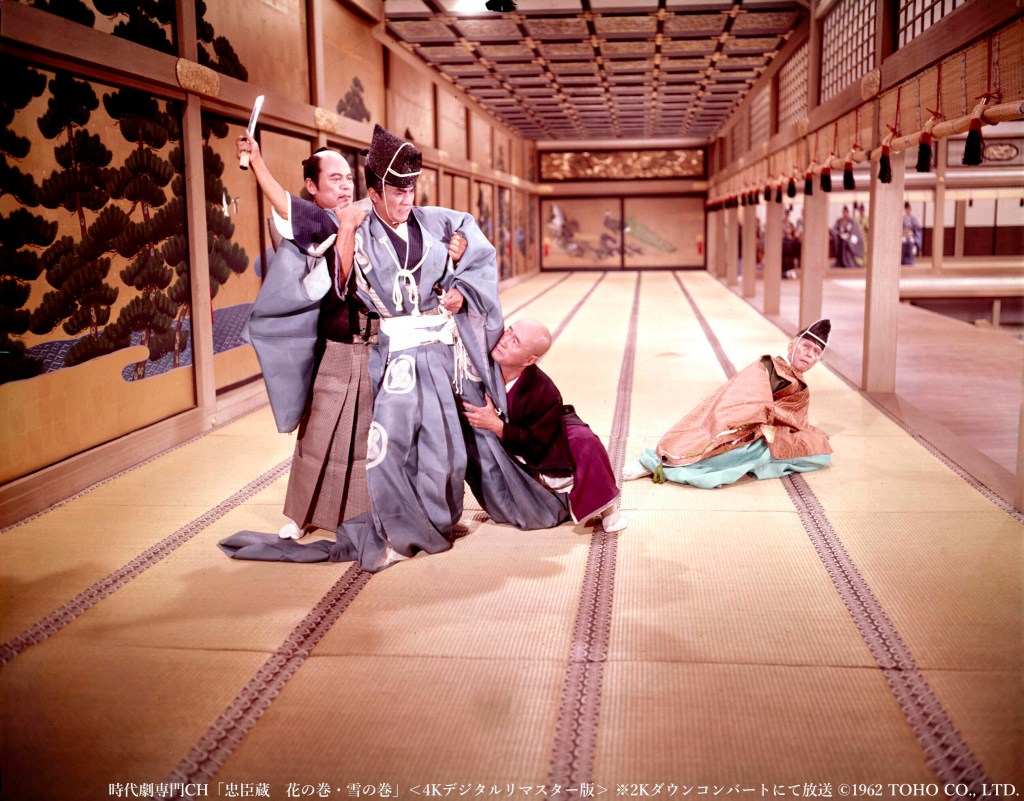
© Toho Co., Ltd.
Lord Asano is ordered to commit suicide and his estate forfeit. Asano’s vassals plot to avenge his death. They are led by Ōishi Kuranosuke, the chamberlain of the Akō domain, and collectively they are known to history as the 47 rōnin.
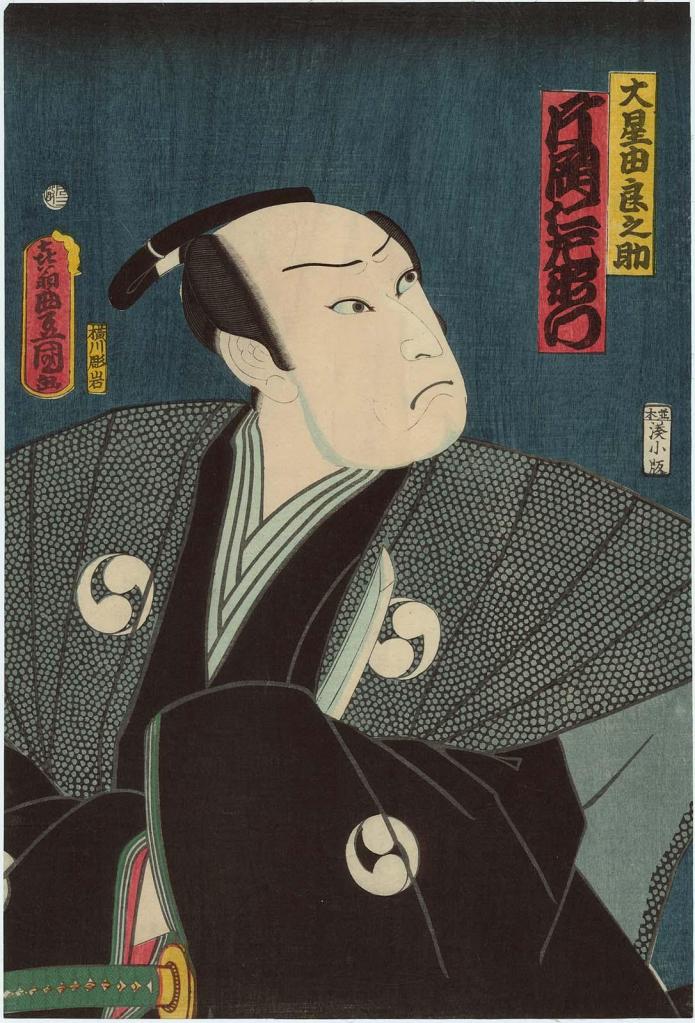
as Ōboshi Yuranosuke (a fictionalized Kabuki name for Ōishi Kuranosuke).
William Sturgis Bigelow Collection, MFA Boston
Ōishi Kuranosuke is a fantastic role and pretty much every major male film star in Japan has portrayed Kuranosuke at some point including the splendid jidaigeki actors who appear in these pages: Denjirō Ōkōchi, Chiezō Kataoka, Utaemon Ichikawa, Kazuo Hasegawa, Nakamura Kinnosuke, and Toshirō Mifune have all played him. As talented as these gentlemen are, for me there is only one Kuranosuke: the magnificent Kabuki actor Matsumoto Kōshirō VIII. When I first saw Inagaki’s Chūshingura I didn’t know who Kōshirō was. I instantly became a forever fan. He also played Ōishi Kuranosuke in a 1954 film for Shochiku which I have heard is excellent but which unfortunately I haven’t been able to see.
Kuranosuke doesn’t appear until one hour into the movie after Lord Asano has committed seppuku on order of the shogun following the altercation with Kira. Chūsha Ichikawa’s villainy as Lord Kira is so outrageous and his creep factor so off the scale that I initially thought he was doing way too much, but on subsequent viewings I concluded this actually works. He’s a repugnant character, and you want to see him get what he deserves.
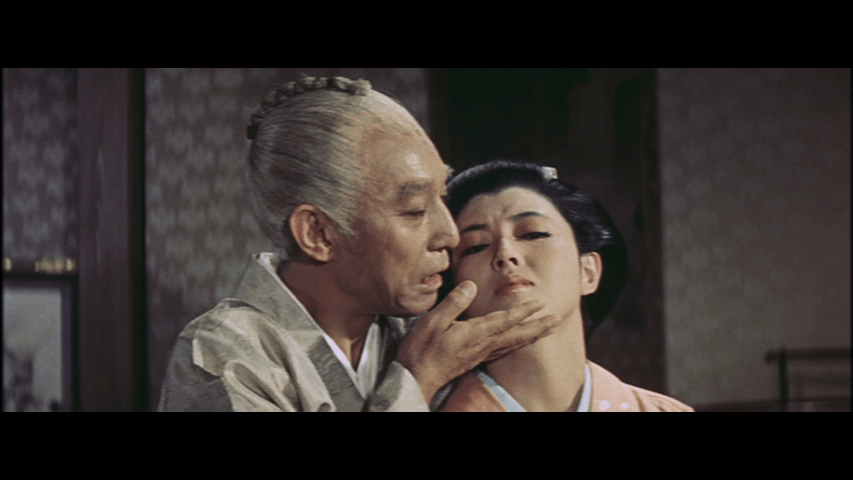
© Toho Co., Ltd.
Ōishi Kuranosuke is Kira’s opposite in every respect. Kuranosuke is the ideal samurai and the perfect leader. His devotion to his late lord is total, and he loves the men under his command like a father. Kira is a coward, a lecher, and a thoroughly despicable person consumed by greed who cares only for himself. The fact that he wasn’t punished for his involvement in the incident with Lord Asano incenses Asano’s retainers. They have been expressly forbidden from seeking revenge on order of the shogun.
A feudal estate is rather like a large business or a corporation. It requires a lot of manpower and management skills to run. An astute and cool-headed fellow like Kuranosuke is ideally placed as the steward of such an organization. Now due to tragic circumstances beyond his control he as well as everyone at the estate is out of work. As a result of the loss of their master and the shogunate’s confiscation of the late Lord Asano’s domain, all the samurai have become rōnin without position or income. They have to find ways to support themselves while Kuranosuke does everything within his power to help them and restore honor to the Asano clan. After weighing his options he comes up with a plan, one fraught with danger and requiring the utmost secrecy for its successful execution: Kuranosuke and a select group of men from Akō will reunite in Edo and assassinate Lord Kira. In terms of the samurai code of bushidō it’s the right thing to do. It also means rebelling against the shogun and certain death for everyone involved.
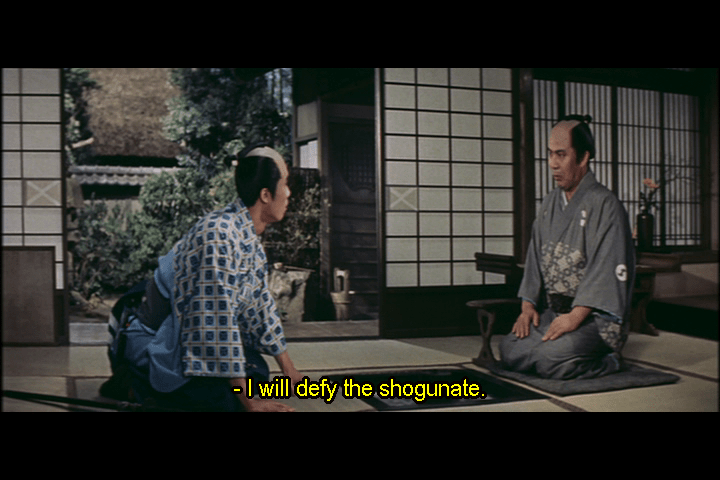
© Toho Co., Ltd.
Under constant surveillance by Lord Kira’s spies who suspect (correctly) that Asano’s retainers intend to avenge him, Kuranosuke relocates his family to Yamashina where he proceeds to pretend to be someone he very much isn’t, which is a feckless debauchee leading a dissolute life, carousing with courtesans at teahouses, effectively destroying his reputation.

William Sturgis Bigelow Collection, MFA Boston
As a cover it’s an intriguing choice, but not without drawbacks. The chief victim of this scheme is Kuranosuke’s devoted wife Riku, played by Setsuko Hara in her final film performance. It’s difficult to reconcile the wan, almost ghostly figure in Chūshingura with the radiant young woman from Ozu’s films. Riku knows nothing of Kuranosuke’s plans and has to endure not only the personal humiliation of her husband’s newly adopted louche lifestyle but the loss of his impeccable image as a man of integrity and her family’s prestige along with it. I understand that a companionate marriage in the contemporary Western sense was not really a thing in Japan during this period, and I admit that I may be misreading their relationship, but as a woman I can’t help but feel compassion for her. I wish Kuranosuke could have taken his wife into his confidence as he did his son Matsunojō (Ichikawa Ennosuke III). Matsunojō (rightly in my view) criticizes his father over this. But he has also vowed to join his father in the vendetta against Kira.
In addition to its sumptuous visuals the film’s score is beautiful, especially the theme accompanying scenes of doomed young couple Okaru (Reiko Dan) and Sanpei, played by Matsumoto Kōshirō’s younger son Kichiemon Nakamura who also appeared with him in Teki wa Honnō-ji ni ari.

Honolulu Museum of Art
The highlight of course is the climactic nighttime raid on Lord Kira’s compound, and it definitely does not disappoint. The entire film has been leading up to this moment. The first time I saw it I started cheering and yelling. It still gets me fired up no matter how many times I watch it. The rōnin are disguised as firefighters to enable them to move through Edo without arousing suspicion.
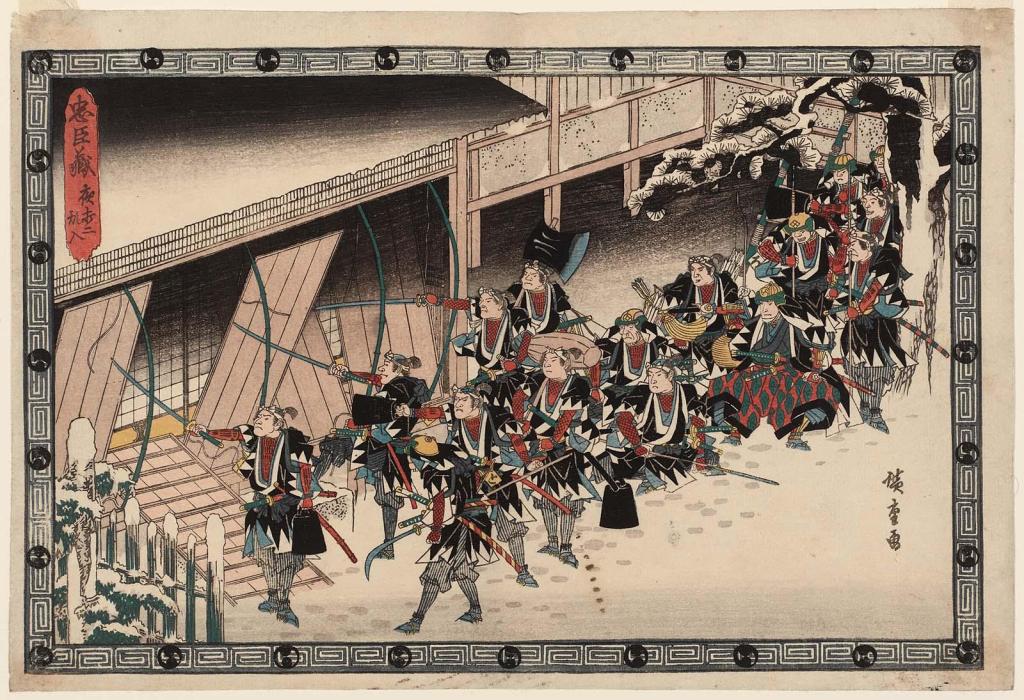
from the series The Storehouse of Loyal Retainers (Chūshingura).
William S. and John T. Spaulding Collection, MFA Boston
Kōshirō looks awesome in his samurai firefighter costume:
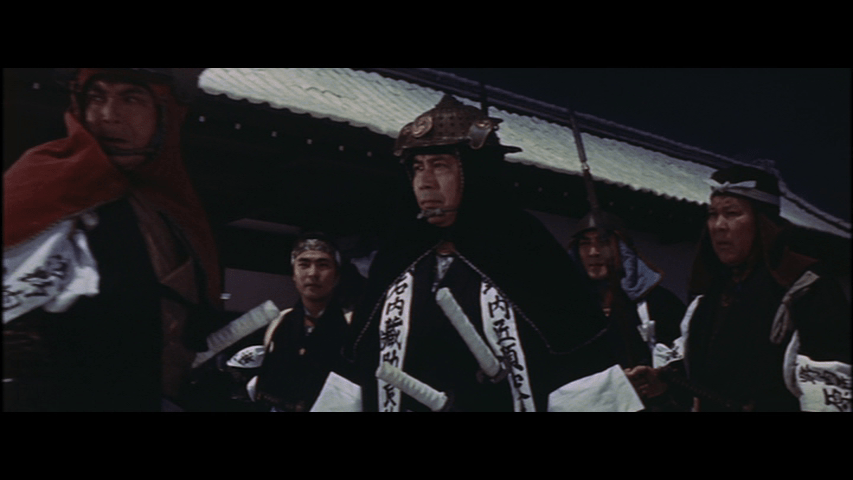
© Toho Co., Ltd.
Fierce fight scenes take place on the grounds of Kira’s mansion.

as Moronao
William Sturgis Bigelow Collection, MFA Boston
The hunt is on for the homeowner who has made himself scarce.
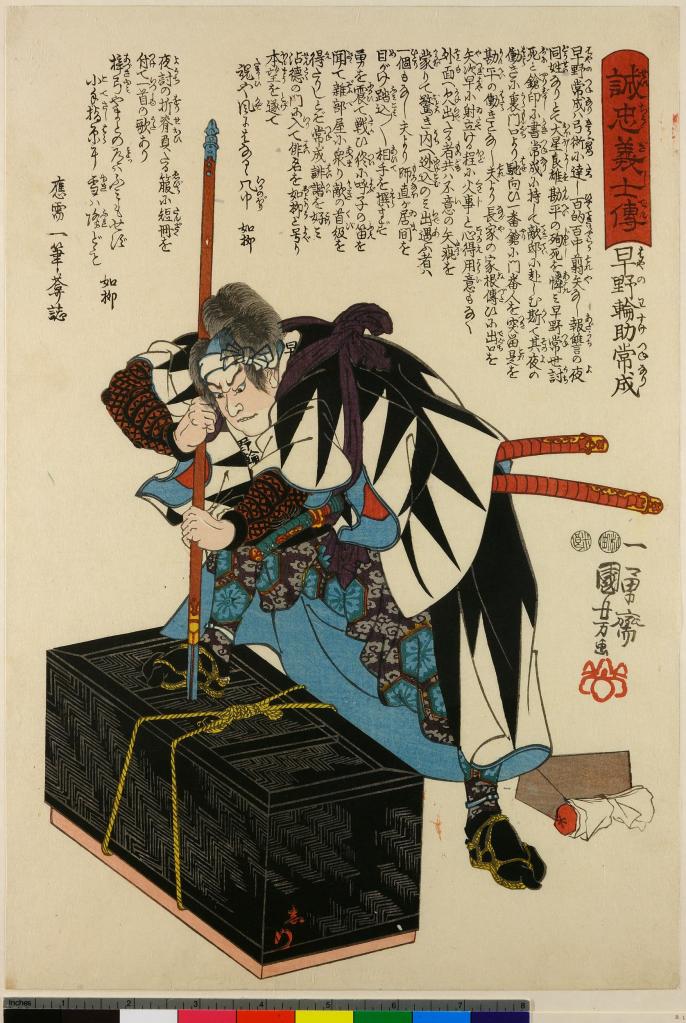
© The Trustees of the British Museum.
Shared under a Creative Commons Attribution –
Non-Commercial – ShareAlike 4.0 International (CC BY-NC-SA 4.0) licence.
Meanwhile master spearman Genba Tawaraboshi (Toshirō Mifune) is running interference outside Kira’s estate. He keeps the police and any pro-Kira forces in check long enough to enable the rōnin to complete their mission and make their escape.
In Kira’s final moments we see a pathetic old man, and it’s tempting to feel sorry for him. He’s scared, he’s tired, it’s cold outside. He’s unarmed, and he’s surrounded by 47 guys who hate his guts. I love how the rōnin are champing at the bit. The ever conscientious Kuranosuke kneels in respect of Lord Kira’s rank and his men follow suit. Kōshirō displays supreme gravitas here as he formally introduces himself. Kuranosuke graciously gives Kira the opportunity to die with honor and commit suicide; Kira, as expected, chooses option 2.
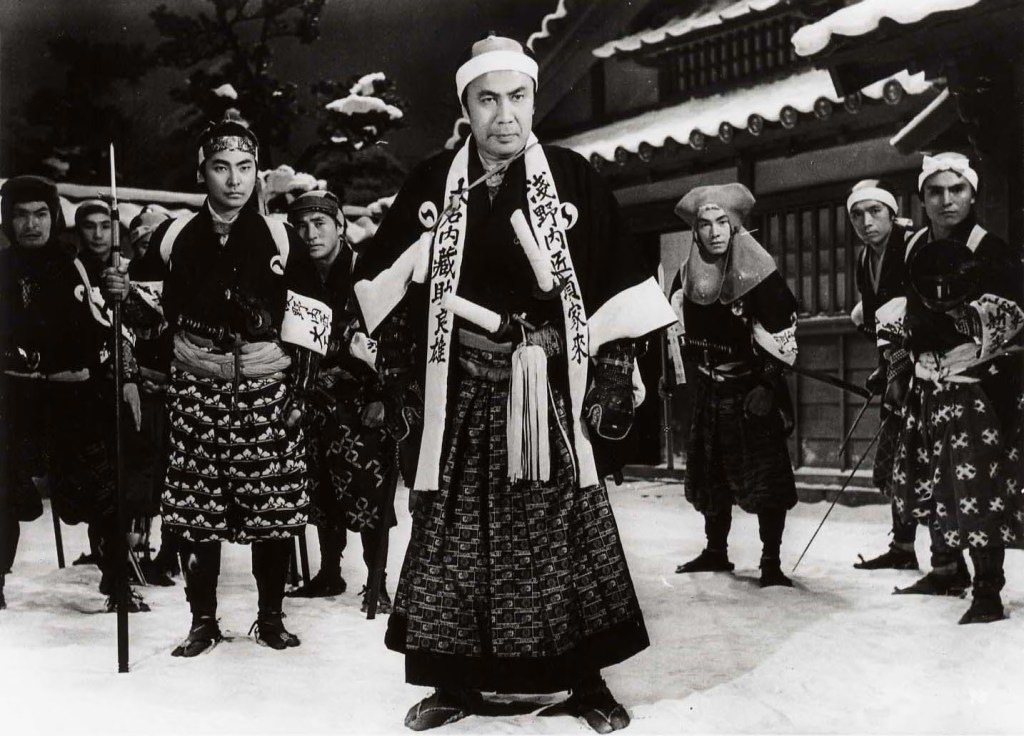
© Toho Co., Ltd.
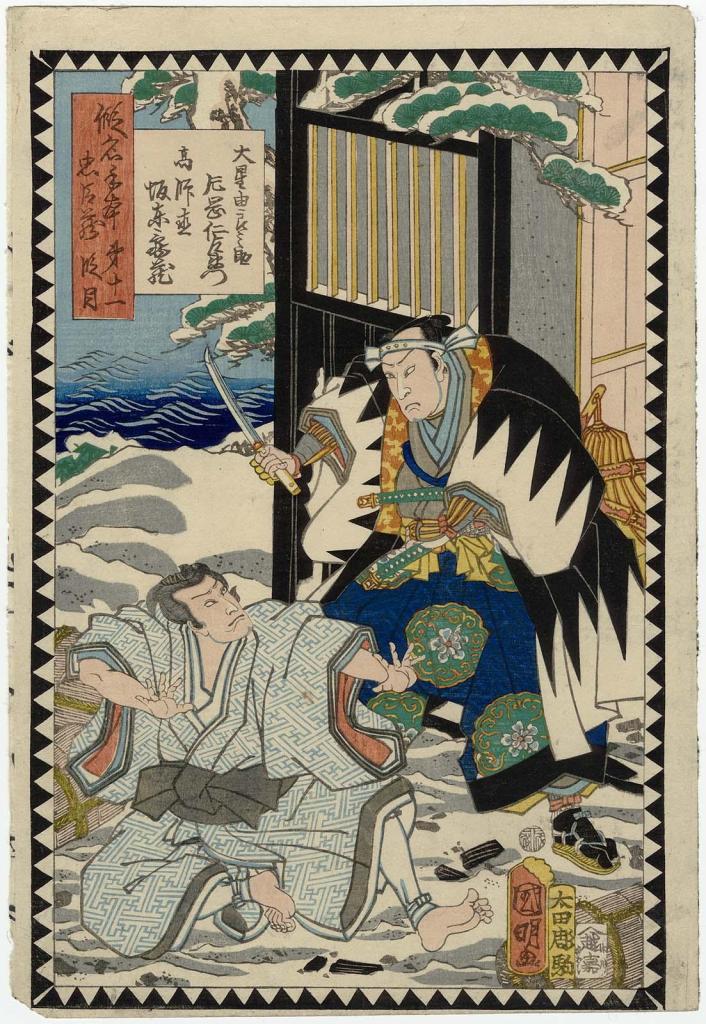
Ōboshi Yuranosuke and Bandō Kamezō I as Kō no Moronao (the Kabuki version of Lord Kira) from the series
The Storehouse of Loyal Retainers, a Primer (Kanadehon chūshingura).
William Sturgis Bigelow Collection, MFA Boston
Dawn breaks and the winter sun illuminates an extraordinary spectacle: Kuranosuke and his band of loyal retainers marching solemnly through the snow into eternity. By this point I’ve cried several times already. Akira Ifukube’s mournful music plays over the finale to cathartic effect. Despite the tragic nature of the story it I never want it to end. That’s the magic of Chūshingura.

Series: Seichu gishi den (Biographies of Loyal and Righteous Samurai).
© The Trustees of the British Museum.
Shared under a Creative Commons Attribution –
Non-Commercial – ShareAlike 4.0 International (CC BY-NC-SA 4.0) licence.

© City of Akō Museum of History

 Ukiyo-e Owl
Leave a comment