Directed by Kenji Mizoguchi

In contrast to last week’s film Ugetsu needs no introduction: this is Criterion Collection content. Unlike Gorotsuki-bune I found Ugetsu a slog. I wanted to like it far more than I did. Perhaps my expectations were too high. It may be heresy to admit this, but I prefer a battered print of a Denjirō Ōkōchi samurai movie over Ugetsu.
Ugetsu is one of Martin Scorsese’s favorite films. Scorsese has impeccable taste, yet about 30 minutes into Ugetsu I realized it wasn’t working. Whenever this happens, especially with something universally acclaimed as a masterpiece, it piques my curiosity. I want to figure out what’s going on.
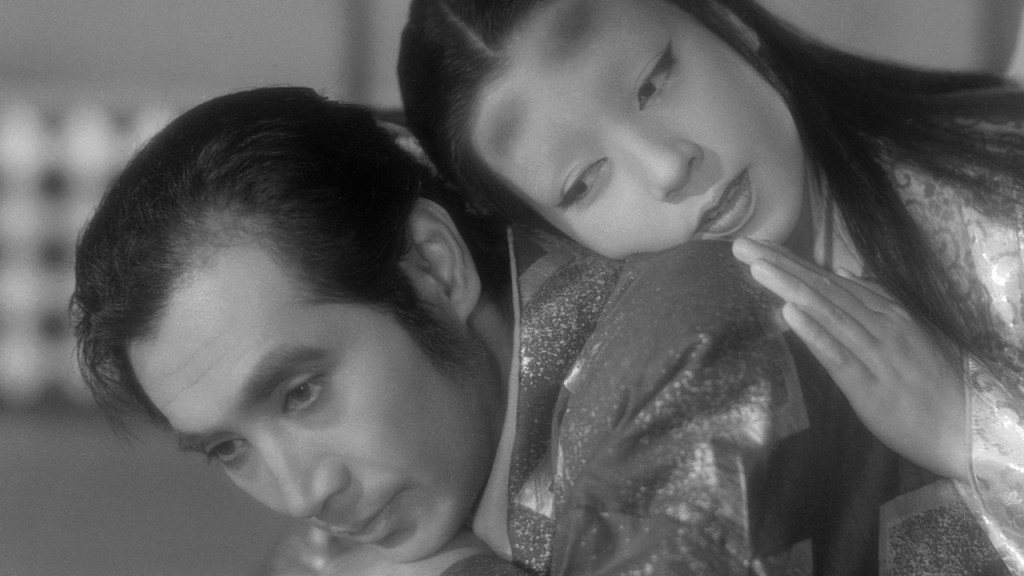
Let’s address the positives first, chief among them Machiko Kyō, perfectly cast as an otherworldly enchantress. Ugetsu reunites her with Kikue Mōri who played her devoted aunt in Jigokumon, and together they look like a diabolical mirror image of their roles in that film.
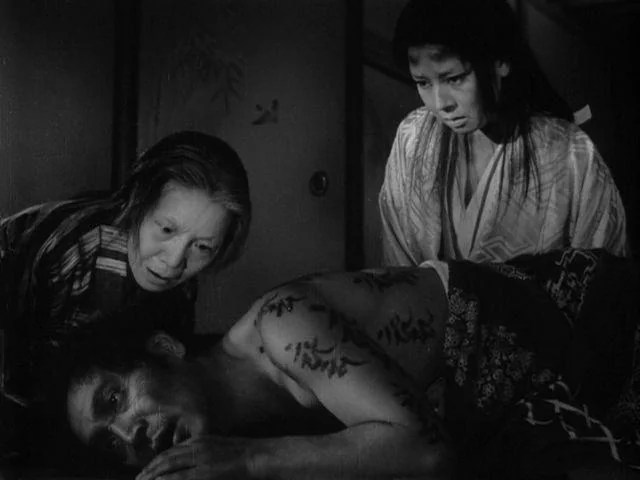
The Criterion Collection © KADOKAWA 1953
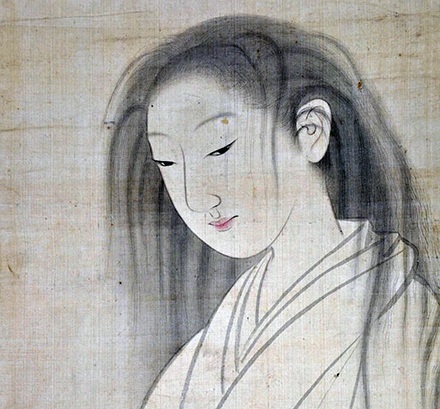
In Japanese folklore whenever a beautiful woman appears out of nowhere and starts chatting up men, it is reasonable to assume that she is a ghost:
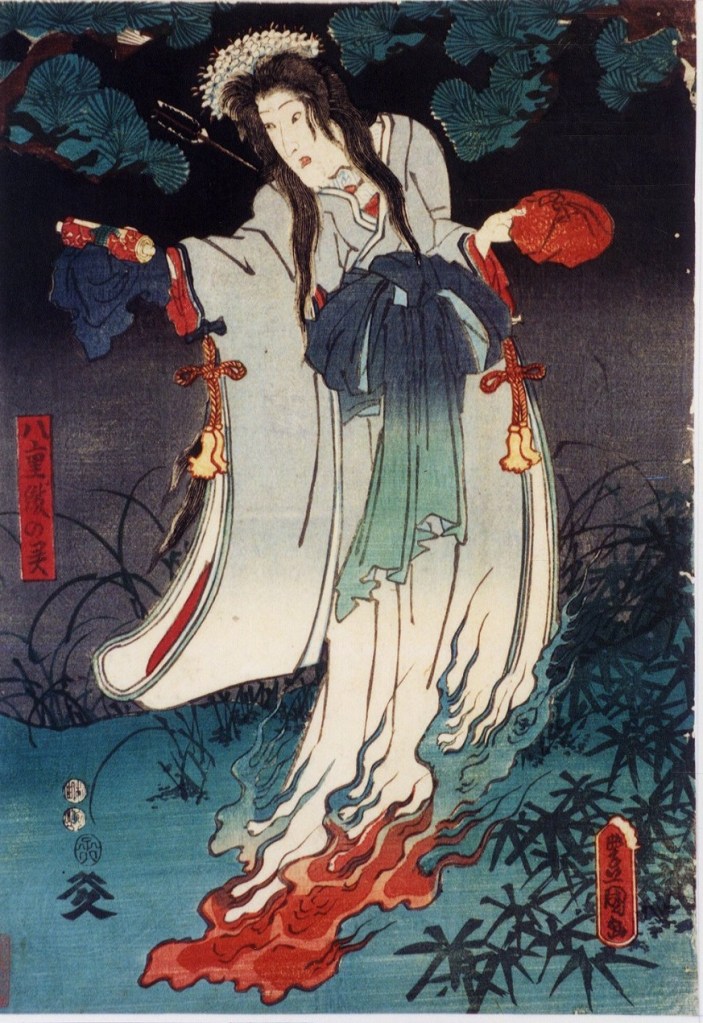
or a demon:
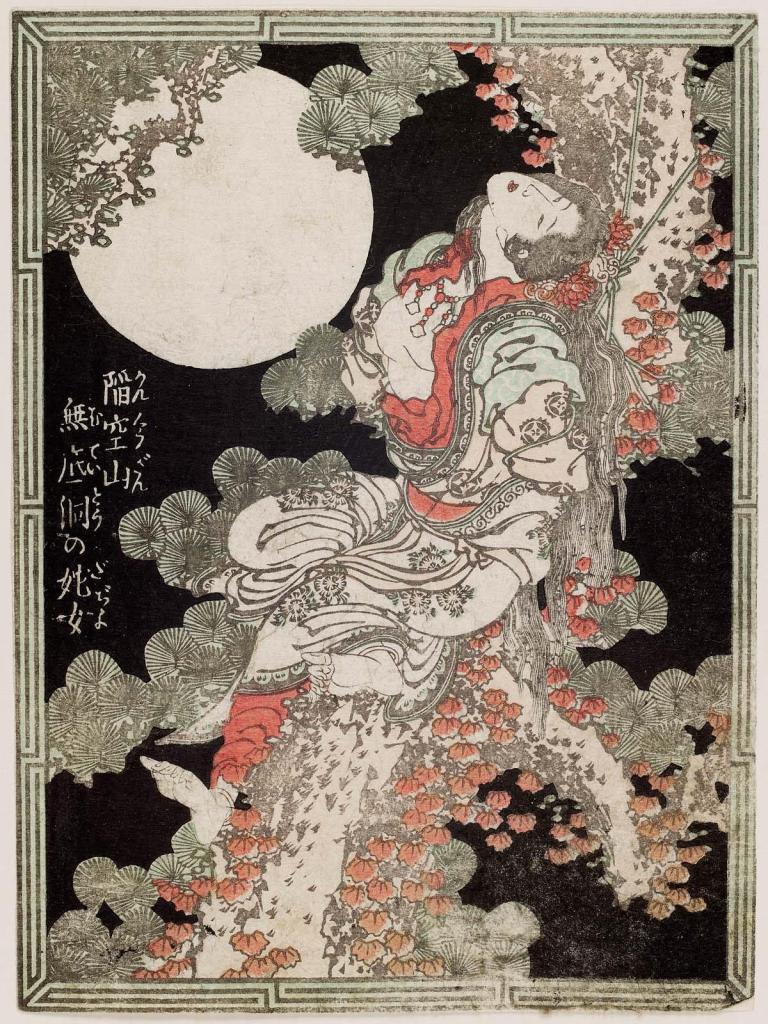
When she’s played by Machiko Kyō you can understand why no one bothers to ask questions before succumbing to her infernal charms.
The Criterion Collection © KADOKAWA 1953
The Criterion print has been meticulously restored. It looks gorgeous, and I liked the score.
Now for the minuses.
My main gripe is that the script is not terribly compelling. It’s not really a horror story. If anything the supernatural aspect— which was Ugetsu’s biggest selling point for me— is under-explored. Ugetsu is a straightforward fable about the perils of greed and ambition. The two central female characters Miyagi (Kinuyo Tanaka) and Ohama (Mitsuko Mito) remain strong and steadfast amidst the suffering they are forced to endure; their husbands, not so much. I found Genjurō (Masayuki Mori) and Tōbie (Eitarō Ozawa) unappealing and devoid of sympathy. Ozawa plays Tōbie the wanna-be samurai so broadly that he comes across as a grotesque buffoon. Maybe that was intentional. I don’t know. All I know is that it makes his scenes almost unwatchable. I just did not care about these two greedy men who forget their wives the moment they sense an illusory opportunity to escape their admittedly dire socioeconomic circumstances as peasants in war-torn Sengoku period Japan.
There’s also a rape scene that felt particularly cruel and pointless. I have now reached my lifetime quota of gratuitous rape scenes, thank you. Another Daiei film that I was very much looking forward to and intending to review, Three Women Around Yoshinaka (1956), turned out to be similarly disappointing. It had so much going for it. An historical epic directed by Teinosuke Kinugasa, it looks splendid and boasts a stellar cast: Kazuo Hasegawa, Machiko Kyō as the legendary female samurai Tomoe Gozen, Hideko Takamine, AND Denjirō Ōkōchi! I was watching it on YouTube thinking how awesome it was going to be, then for no reason at all Hasegawa’s character sexually assaults a young woman who proceeds to follow him around for the rest of the movie like a whipped dog. I was aghast, not to mention pissed, because this should have been Kinugasa’s triumphant follow-up to his magnificent (and rape-free) Jigokumon. My hopes that Denjirō’s character would do the right thing and take down Hasegawa were dashed when Denjirō’s character chose to commit suicide. (I would too if I were stuck in that movie.)
I have read that Mizoguchi is best appreciated on the big screen. Never having had that privilege, I will say that I watched The Story of the Last Chrysanthemum (1939) and Chikamatsu Monogatari (1954) on my iPad and loved both. Ask me about movies and I will happily natter about whatever grabs me; Ugetsu didn’t. I try not to post negative commentary here because I want to encourage people to watch films. As always, read reviews (it’s a Mizoguchi film! There are plenty to choose from!) and decide for yourself. Ugetsu is available with English subtitles via Criterion’s streaming platform.

 Ukiyo-e Owl
Leave a reply to Tokugawa Sekkusu Kinshi-rei: Ahikijō Daimyō (Tokugawa Sex Ban / The Erotomaniac Daimyō) (1972) – Ukiyo-e Owl Cancel reply