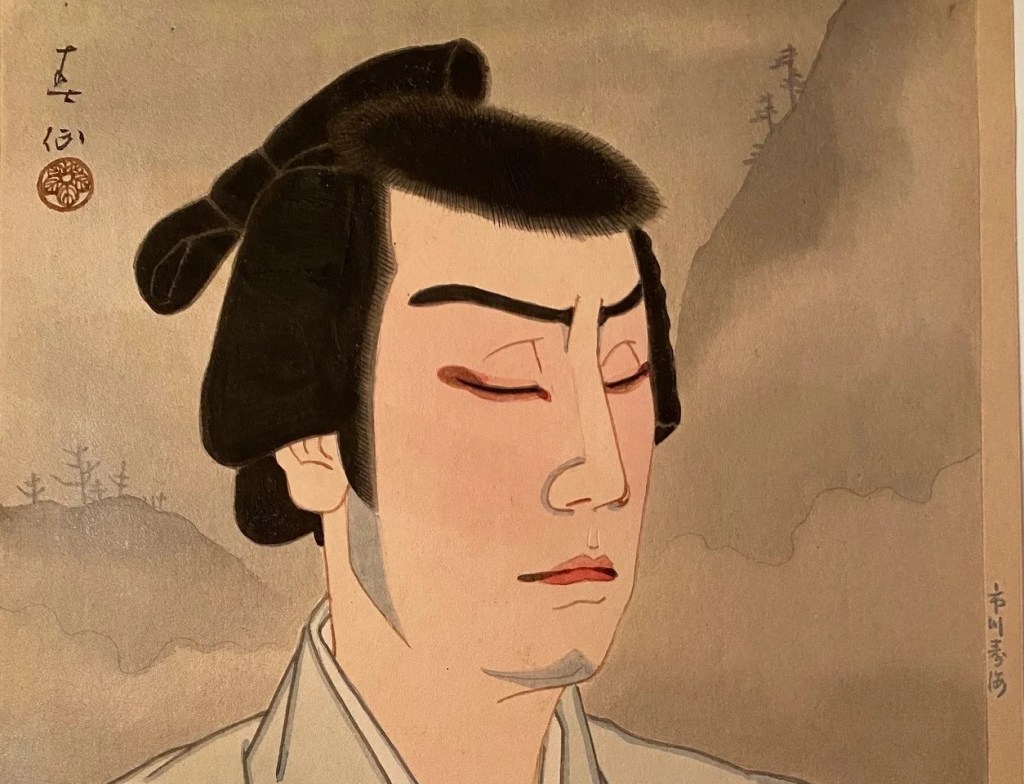
Directed by Tomu Uchida
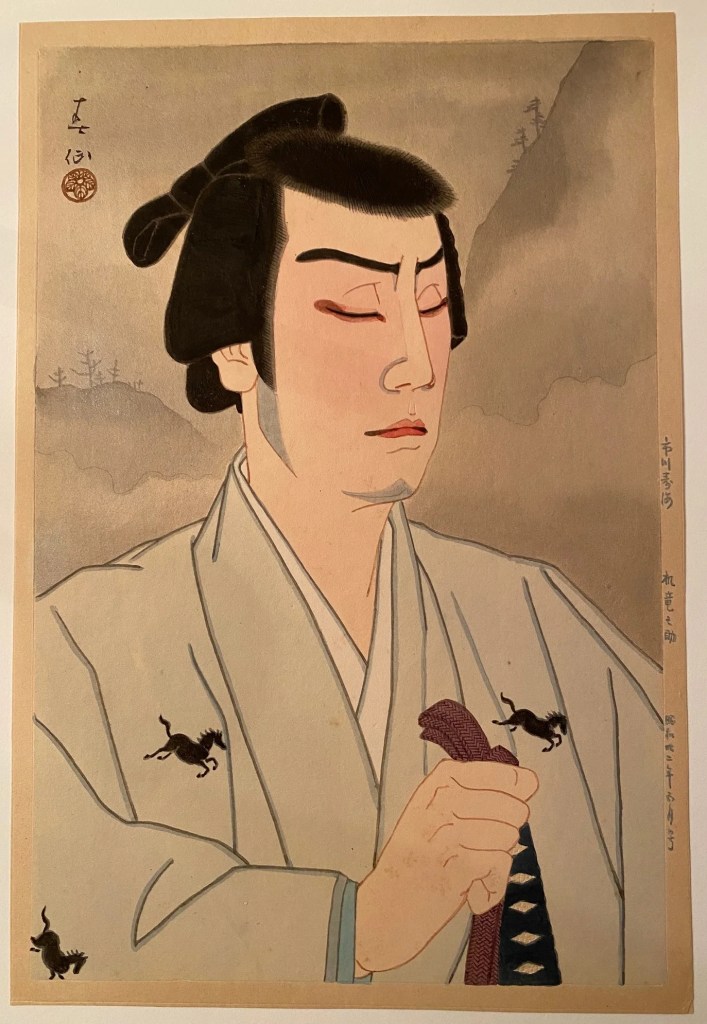
Image courtesy of Darrel C. Karl
https://mjpap.com/
Introduction
A bodhisattva is a compassionate awakened being who helps others achieve enlightenment. Such beings are in short supply in Dai-bosatsu tōge, Tomu Uchida’s epic three-part adaptation of Kaizan Nakazato’s novel, a vast sprawling work comprising 41 volumes published over the course of nearly 30 years, from 1913 to 1941. The book remained unfinished at the time of Nakazato’s death in 1944. Even before Uchida directed his trilogy, Nakazato’s dark saga had already undergone a fascinating evolution across Japanese stage and screen.
Dai-bosatsu tōge is one of the foundational texts in samurai cinema. Uchida’s adaptation, known in English-speaking countries as the Swords in the Moonlight trilogy, depicts the fictional journey of master swordsman Ryūnosuke Tsukue (Chiezō Kataoka) against the historical backdrop of the collapse of the Tokugawa shogunate in the 19th century. Ryūnosuke’s total disregard for the samurai code bushidō reflects the lawlessness of this chaotic era, known as the Bakumatsu period. Ryūnosuke does not give a fuck. He’s the original cool nihilistic samurai. Women are constantly pulled into his orbit by the irresistible gravitational force of his aura.
The Novel (1913 – 1941)
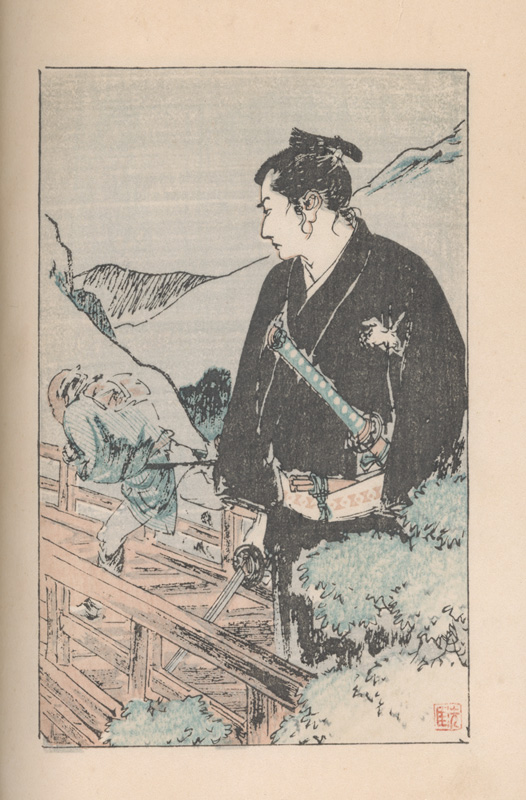
Dai-bosatsu tōge (1922)
Dai-bosatsu tōge takes a traditional Kabuki villain — handsome on the outside, evil on the inside — and makes him the protagonist. In Taishō era Japan, an antihero like this felt new and shocking, and Nakazato’s book caused a sensation.
The Play (1921)
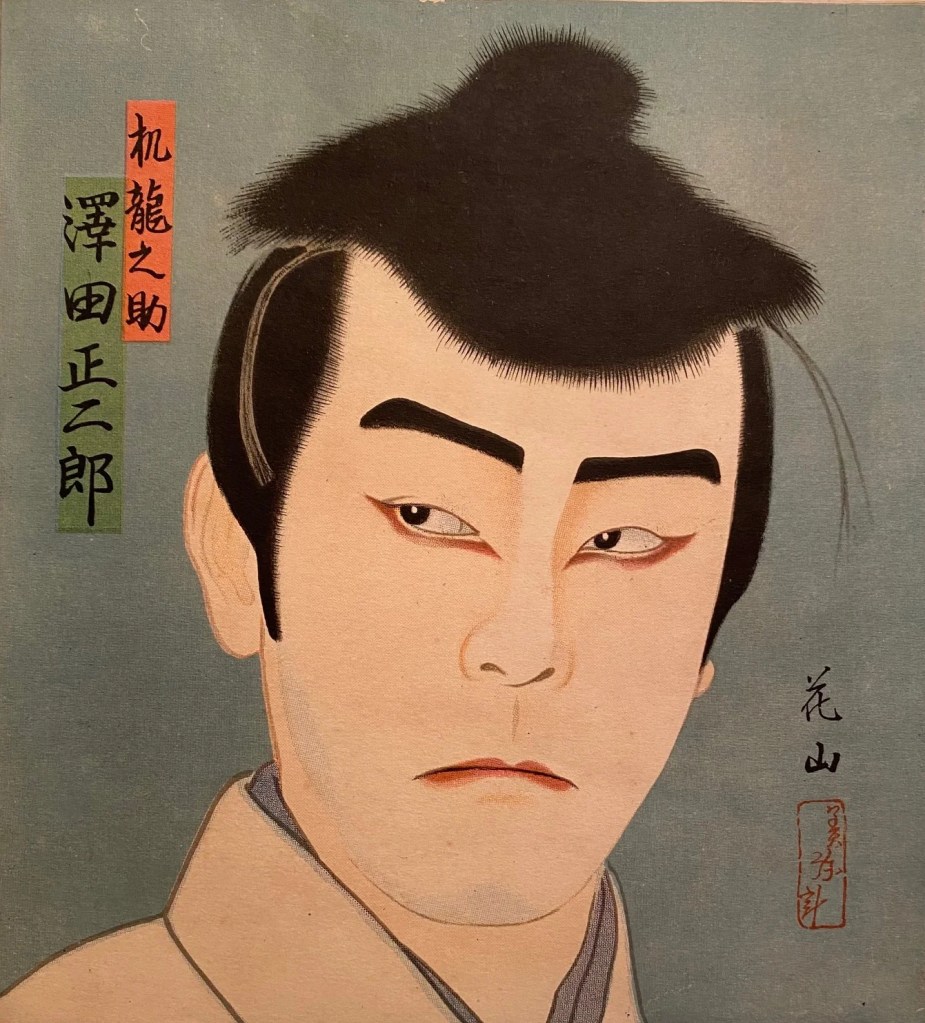
Asakusa Shochiku-za, Tokyo 1923
Image courtesy of Darrel C. Karl
https://mjpap.com/
In 1921 New National Theatre founder Shōjirō Sawada mounted the first ever dramatic production of Dai-bosatsu tōge.
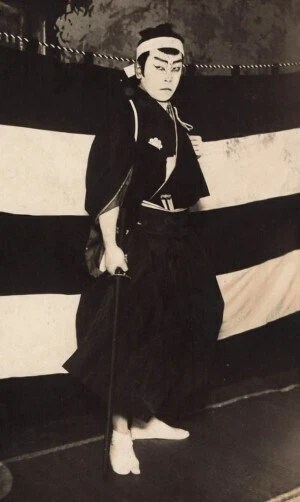
Ryūnosuke
While the makeup we see here is clearly Kabuki-adjacent, the way Sawada staged action marked a radical departure from tradition. Fight scenes in Kabuki (tachimawari) are highly stylized and resemble dance more than armed combat. With their dynamic fast-paced fight choreography and innovative special effects— strobing lights to mimic a flickering paper lantern, rainfall on stage using real water— Sawada’s theatrical productions revolutionized action scenes and exerted a powerful influence on the then-nascent jidaigeki film genre. Chambara (sword-fighting) films combine the stylized forms from Kabuki with more realistic action, although it is never wholly realistic because everything you see on camera has been choreographed to create a spectacle, a dramatic illusion. 1
The Lost Epic: Hiroshi Inagaki’s Dai-bosatsu tōge (1935 – 1936)
The runaway success of Sawada’s theatrical production made a cinematic adaptation of Dai-bosatsu tōge a top priority for film producers. But how to adapt Nakazato’s long, densely plotted narrative into a commercially viable film format?
Complicating matters was Nakazato’s reluctance to sell the film rights. Nakazato was furious over Sawada’s staging and tried to have his production of the play banned.
Nikkatsu developed a feature film version as a showcase for their sword-fighting superstar Denjirō Ōkōchi. Nakazato had his own ideas about casting and wanted a martial artist to portray Ryūnosuke rather than an actor. The director Hiroshi Inagaki convinced him that Denjirō was the best choice for the role. Denjirō must have been eager to close this deal because he bought the film rights with his own money.
After six years of development Nikkatsu released a three-part adaptation of Dai-bosatsu tōge. Part 1 was produced and released in 1935. Parts 2 and 3 were produced in 1936 and released simultaneously.
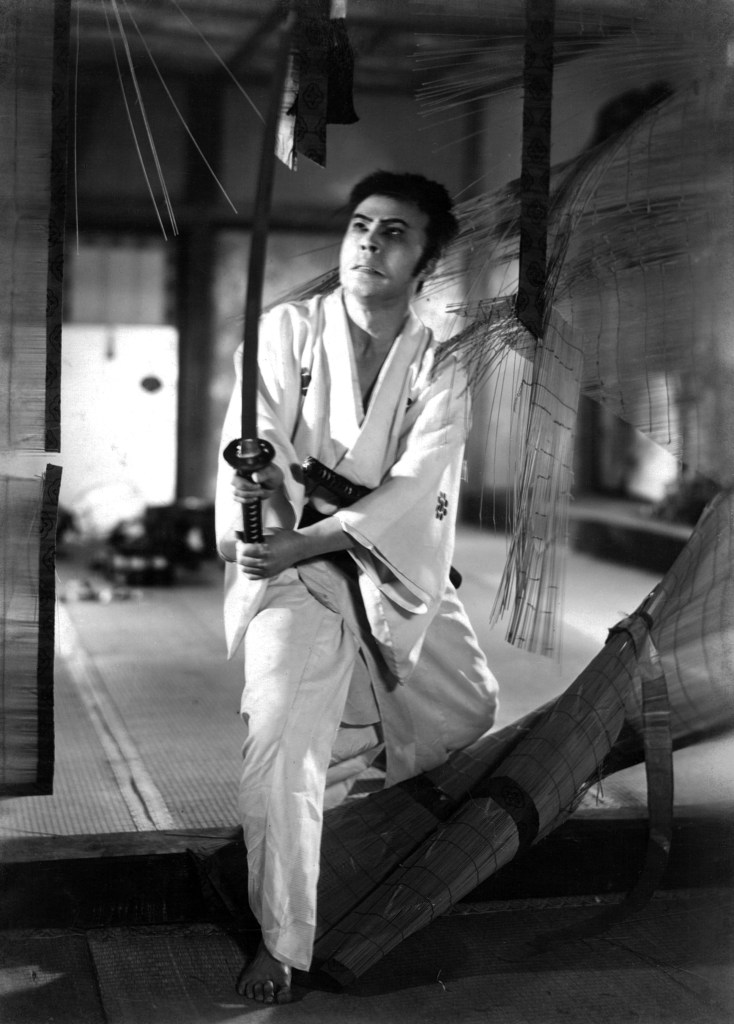
All three films were considered lost in their entirety for decades. A print of Part 1, The Chapter of Kōgen Ittō-ryū comprising 77 minutes of footage turned up in Russia. This print was transferred from Russia’s national film archive Gosfilmofond to the National Film Center in Tokyo in 2003. Part 2 and Part 3 (The Chapter of Suzuka Mountain and The Chapter of Mibu Shimabara) are still missing apart from a one-minute fragment.
The Ban (1945 – 1952)
During the Allied Occupation of Japan filmmakers had to submit all scripts to the Civil Information and Education Section (CIE) for pre-production approval and the finished film to the Civil Censorship Detachment (CCD). Sword-fighting movies were completely banned. Classic Kabuki plays were also banned as these were believed to promote feudal values and glorified violence and revenge-seeking. In 1949 direct film censorship began to transition to industry self-regulation. The CCD was formally dissolved in late 1951.
Post-war Renaissance and the Watanabe Trilogy (1953)
© Toei Company, Ltd
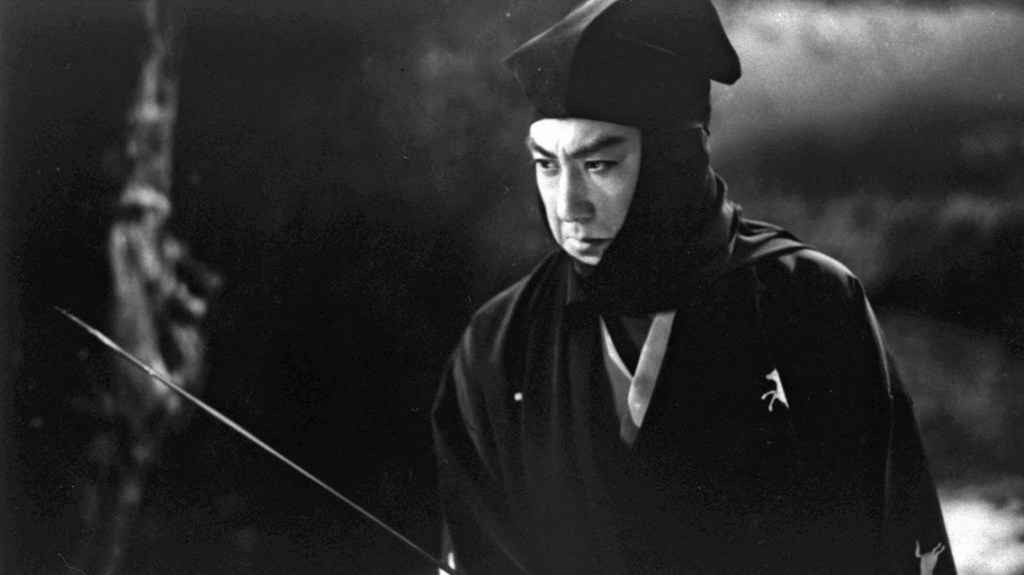
The Allied Occupation ended in 1952. For the next decade the Japanese film industry saw a massive resurgence in historical dramas. Leading the way was Toei, who quickly became the dominant player in the genre. They had two of the biggest pre-war jidaigeki stars on their roster of actors, Chiezō Kataoka and Utaemon Ichikawa. Chiezō starred in Kunio Watanabe’s adaptation of Dai-bosatsu tōge in 1953.
Watanabe’s Dai-bosatsu tōge has never been released on DVD and can only be viewed on Toei Channel. Part 1 is airing this month! Unfortunately all Toei Channel content is region-locked to Japan, and I’m in the United States. I’m dying to see this, so if a technically-inclined person can figure out how I can make that happen please email me or leave a comment below.
The definitive Dai-bosatsu tōge (1957 – 1959)
© Toei Company, Ltd
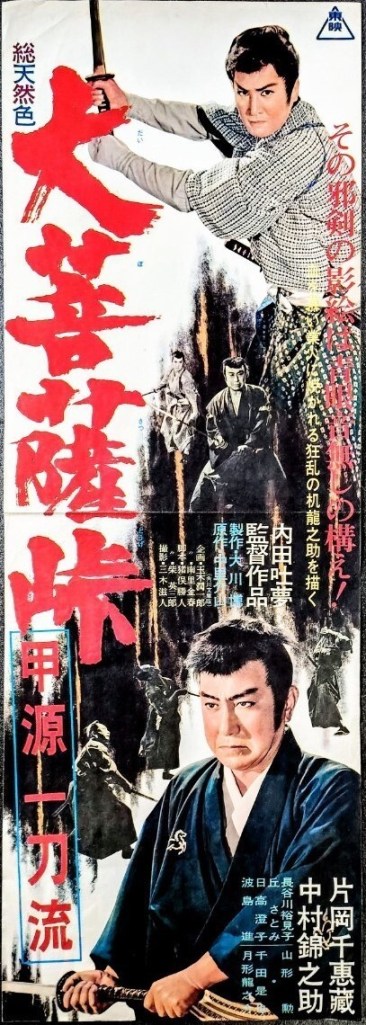
Just four years after Watanabe’s trilogy, Toei released the first chapter of Tomu Uchida’s Dai-bosatsu tōge in Agfa Toei Color and ToeiScope, the studio’s new proprietary anamorphic widescreen format. Agfa Toei Color was Toei’s rebranded version of Agfacolor, a color process invented in Germany in 1936. Known for its subdued palette, Agfacolor’s desaturated ‘vintage’ look was an excellent fit for a dark historical drama. This was Uchida’s first color film. I think it’s a masterpiece, and that is not a word I use often.
Satan’s Sword (1960 – 1961)
Daiei produced their own three-part adaptation starring Raizō Ichikawa: Satan’s Sword (Dai-bosatsu tōge), Satan’s Sword II (Dai-bosatsu tōge: Ryūjin no maki), and Satan’s Sword III (Dai-bosatsu tōge: Kanketsu-hen). Raizō has a passionate fanbase, and I am aware that some people prefer his interpretation to Chiezō’s. Raizō is a lot younger. With his long lean frame and elegant face, he offers a closer resemblance to Ryūnosuke as described in the book:
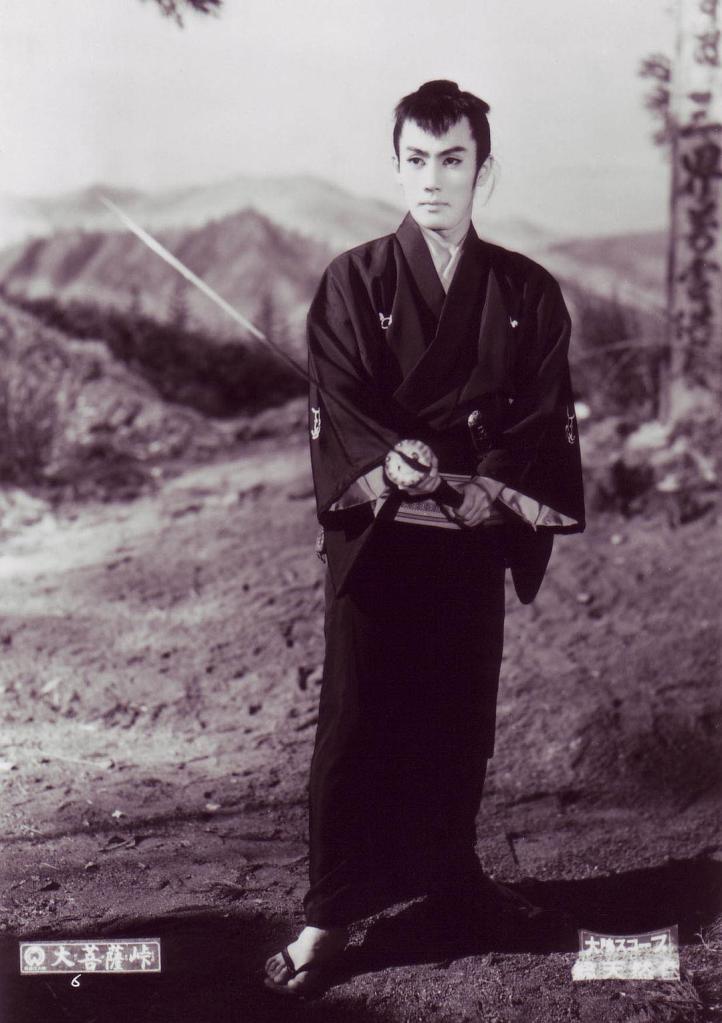
Judging by the photo this part fits Raizō like a glove, right? Yet after watching him I believe he pales in comparison. Don’t come for me, Raizō fans! Y’all probably think I’m hopelessly biased in favor of Chiezō. I am, but I also would be the first to tell you if I thought Raizō did a better job. He’s too remote and doesn’t exude enough threat.
This was a surprising disappointment from Kenji Misumi, who directed the brilliant and devastating Yotsuya kaidan (The Ghost of Yotsuya), which I adore. Despite exceptional work from Tamao Nakamura, Daiei’s trilogy lacks the impact of Uchida’s and plays like a standard if overlong jidaigeki rather than an epic.
The Sword of Doom (1966)
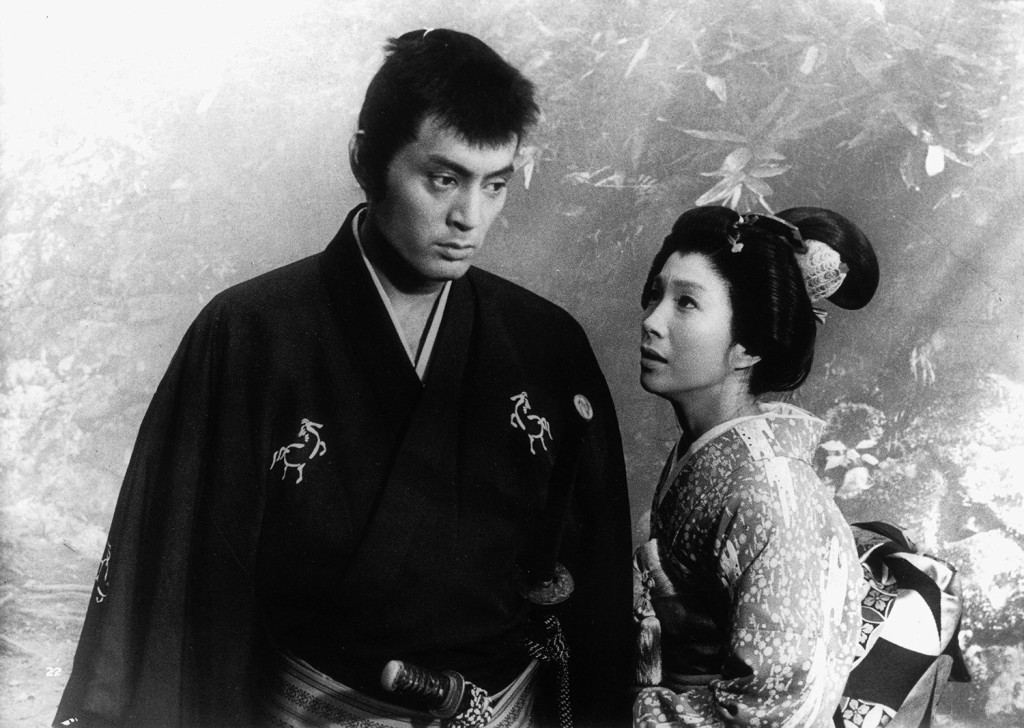
© Toho Co., Ltd
The Sword of Doom stars Tatsuya Nakadai and is the most well-known iteration of Kaizan Nakazato’s story outside of Japan thanks to its availability on Criterion. It covers only a fragment of the plot and lacks the majestic scope and psychological depth of Tomu Uchida’s adaptation. I genuinely don’t get the hype surrounding this. The photography and editing are excellent but the script is not great, and Tatsuya Nakadai’s performance as Ryūnosuke struck me as flat and one-dimensional. His Ryūnosuke starts off crazy and remains crazy throughout without much variation in between. I didn’t care about him or any of the other characters for that matter.
Don’t tell anyone, but I lowkey prefer Tatsuya Nakadai and Toshirō Mifune in contemporary roles as opposed to jidaigeki:
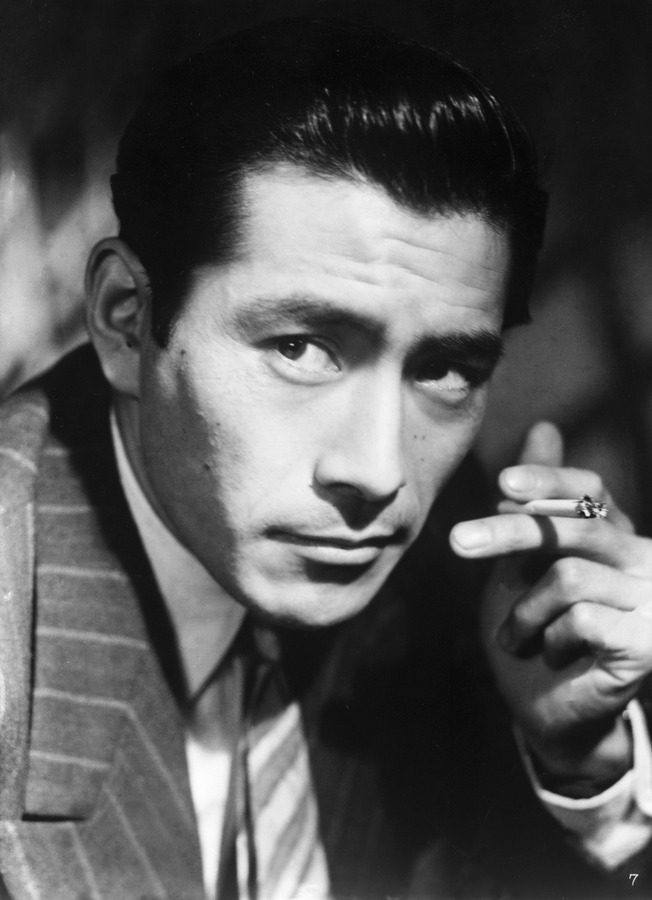
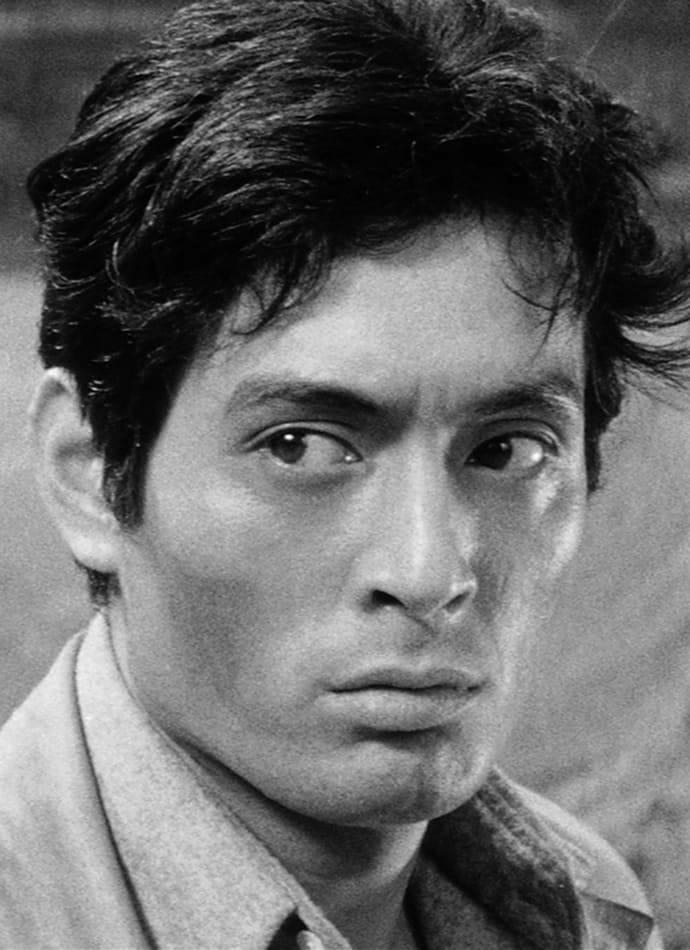
(I rest my case. Good LORD.)
Speaking of Toshirō Mifune, he’s the best thing in The Sword of Doom. He plays the dōjō master Shimada Toranosuke. We’ll meet this character again in Part 1 of Uchida’s trilogy.
Ladies Love a Sturdy Samurai
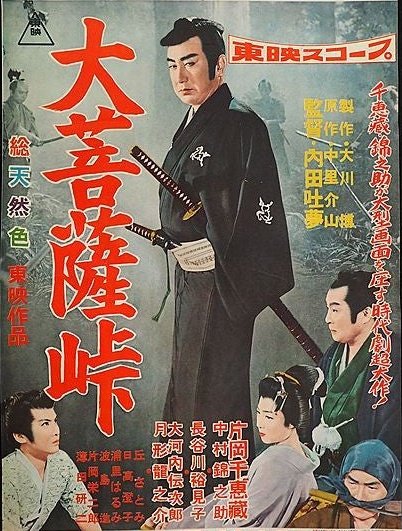
I’m always curious to learn what viewers in Japan have to say about the films I discuss. I’ve seen comments on blogs and film review sites complaining that Chiezō Kataoka is too old and/or too sturdy to play Ryūnosuke. In an attempt to be charitable I shall assume that by ‘sturdy’ they mean ‘robust’ rather than ‘fat’.
Age and appearance are fairly irrelevant to me as long as an actor is up to the physical demands of the role and can make the character believable. If I’m casting a movie and have a choice between a great actor who isn’t a perfect fit for the role in terms of his looks and a lesser actor who looks the part, I’m going to choose the former 100 percent of the time. Physicality isn’t about how closely an actor resembles a character as imagined by an author. How an actor moves, how he uses gesture, how he shows us what he’s thinking and feeling— all of these are critical to embodying a character.
As for being sturdy, that’s just how Chiezō’s built. He’s got a ‘dad bod’ thing going. Actors from his generation did not spend every spare hour at the gym. Evaluating a 1950s cinematic icon by 21st century physical standards is ridiculous and misses the point of what made that era’s movie stars great.
© Toei Company, Ltd
Also, can we be real for a second? Sturdy guys can get it. Throughout Uchida’s trilogy Ryūnosuke has no problem whatsoever attracting beautiful women, proving that a nihilistic, blood-soaked soul pairs well with a stocky physique. The man is besieged by babes wherever he goes! When I first saw Dai-bosatsu tōge I found this amusing. Why are all these lovely ladies so captivated by a murderer?
Kabuki Explains It All
The answer, as is the case with nearly everything I write about here, lies in Kabuki. Ryūnosuke is an iroaku, a handsome and charismatic villain who effortlessly attracts women. Iroaku is a stock Kabuki character. Lady-killers in every sense of the word, these men are cruel and seductive. The most notorious iroaku is Tamiya Iemon in Tōkaidō Yotsuya Kaidan, a man haunted to the point of madness by the wife whom he betrays. Ryūnosuke has a lot in common with him.
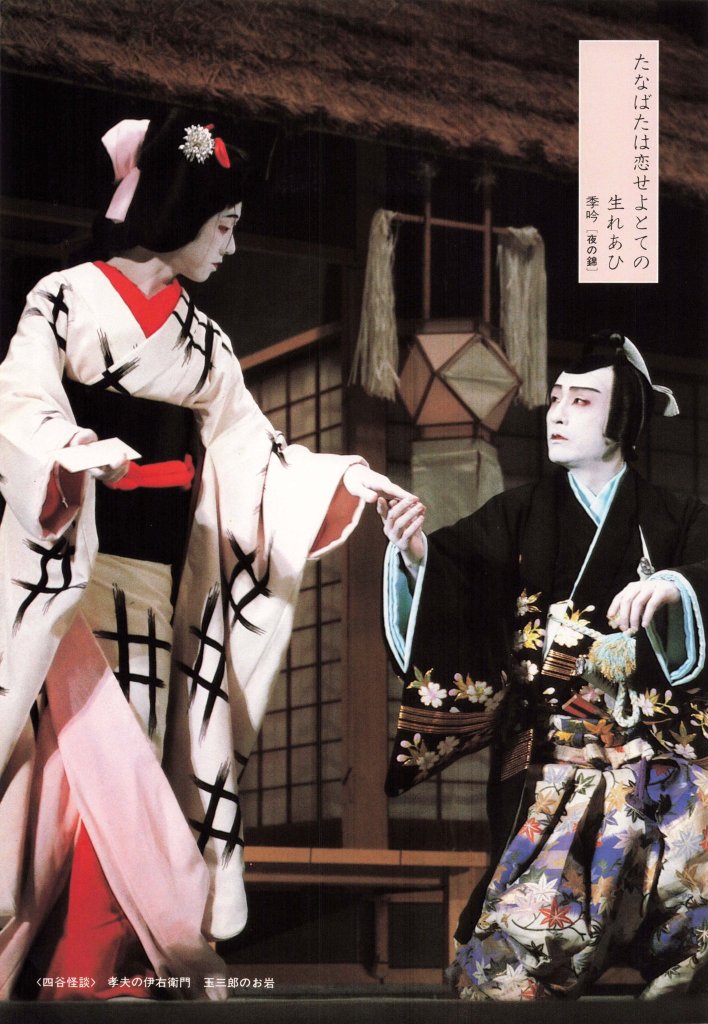
Your samurai boyfriend is as handsome as a prince in a fairytale. He adores you and would risk his life to protect you.
Oiwa (Bandō Tamasaburō V) and Tamiya Iemon (Kataoka Nizaemon XV)
© Shochiku Co., Ltd.
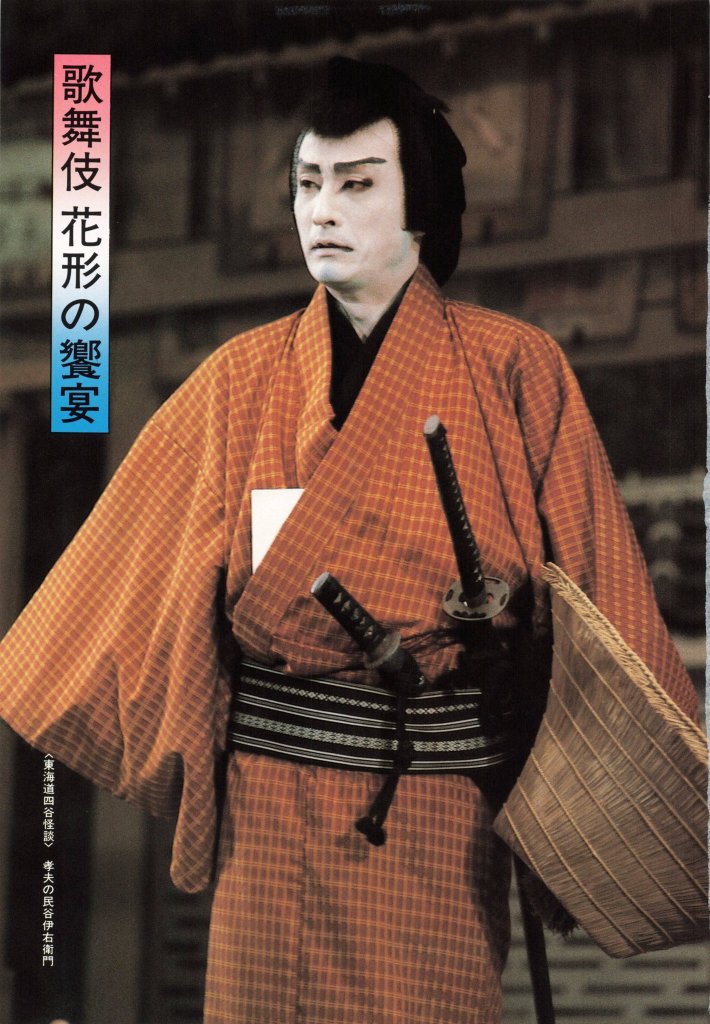
Your husband is a broke rōnin and the meanest sonofabitch you have ever met. After your untimely death your ghost will haunt him until he goes insane.
Tamiya Iemon (Kataoka Nizaemon XV)
© Shochiku Co., Ltd.
Damn Chiezō, You Scary
Another member of Japan’s film commentariat confessed that when she saw Dai-bosatsu tōge on TV as a child she had to sleep with the light on afterwards. I don’t blame her. If you’ve seen Chiezō Kataoka in another superb drama set during the Bakumatsu period, Shinsengumi Oni Taicho (1954), you know exactly what I’m talking about when I call him an unstoppable force of nature. Now imagine that kind of power and intensity as a dangerous psychopath instead of the heroic Kondō Isami. When a man built like a brick wall stands perfectly still, looks right through people with a flat affect, and moves with heavy deliberate precision, it creates an overwhelming sense of dread. While it would have been fun to see what he could have done with this character when he was younger, as a mature actor Chiezō makes Ryūnosuke come to life as no one else has.
Navigating a Bakumatsu Epic
Before we dive deeper, I want to discuss my approach to these films. The Dai-bosatsu tōge trilogy is very plot-intensive. Part 1 packs an extraordinary amount of story into a single film. If you like 19th century novels you will feel right at home; if not, you may feel a bit lost. I could either gloss over most of the plot and focus on my impressions of the films in aggregate, or I could look at each film in detail. I have chosen the latter; not simply because this is my style, but because it gives me the opportunity to share with you some background which will enhance your experience when you watch Dai-bosatsu tōge yourself.
I have of necessity condensed my summary wherever possible to concentrate on the main storyline. Due to the trilogy’s length I have broken my commentary into multiple posts. I do not shy away from discussing major plot points and reveals. Reader discretion is advised if you haven’t seen the movies yet!
Dai-bosatsu tōge is set during the waning years of the Edo period. Ukiyo-e and the ‘floating world’ they depict would soon be a relic of the past. With the advent of photography and lithography traditional woodblock prints were seen as old-fashioned. The end of feudalism and the rise of Western influence changed the Japan we see in ukiyo-e irrevocably. Kaizan Nakazato’s novel is an original work from the Taishō/early Shōwa eras and postdates the golden age of ukiyo-e. The majority of the images included herein are inspired by this tragic tale rather than strictly illustrative.
Now, a Warning
The first time I saw the Uchida version I binge-watched the entire trilogy in one go while recovering from surgery. I do not actually advise this and can only say that it may have had something to do with my being heavily medicated at the time.
Here’s what I recommend. Part 1 is so good that it works as a standalone movie. Just watch it! If you like it you will want to watch the whole trilogy. I keep my favorite scenes on repeat on my iPad and inside my head.
It is incomprehensible to me that these films aren’t better known. They singlehandedly converted me from a mere admirer of Chiezō (what a great actor he is!) to an ardent fan (OMG I LOVE HIM). Mock all you want, but the same fate could befall you, and before you know it you’re spending a fortune on vintage posters, not to mention postage.
Welcome to Buddhist Hell
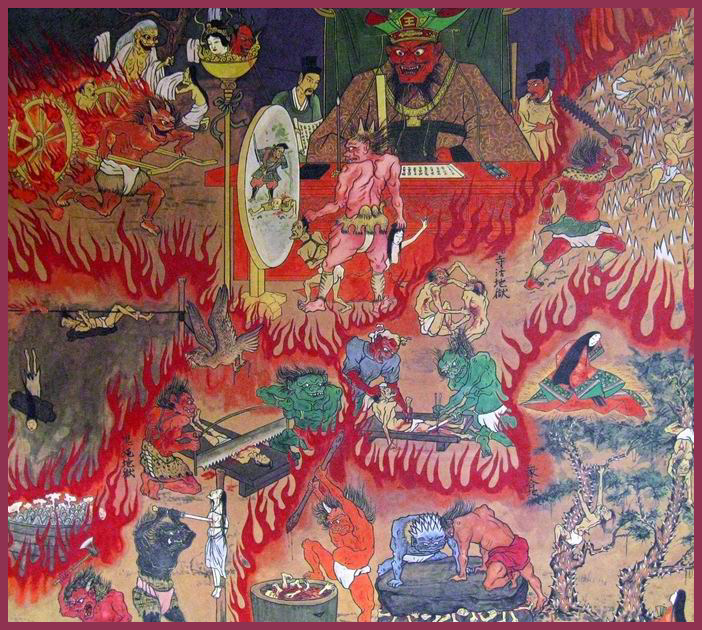
The thing about Chiezō’s Ryūnosuke is that as bad as he is, he’s not even the worst person in the movie. That a serial murderer is not the most evil character in Dai-bosatsu tōge should give you a clue regarding the hellscape we’re about to enter. The film’s universe is an unforgiving place populated by predators and prey. Ryūnosuke keeps the worst of the bad guys in check. Not out of any sense of altruism— pro-social feeling appears to be alien to him. Instead it is as if he is the instrument of some external force.
Karma is the driving force of all that happens in Dai-bosatsu tōge. It brings characters together and tears them apart. The weight of karma is so oppressive in this that it feels like everyone is actually dead and the cruelties they are forced to endure take place in an infernal afterlife.
The opening credits depict a descent into Buddhist Hell. The main character of Dai-bosatsu tōge is a wanderer, a samurai who commits a series of murders for which he seemingly escapes punishment. But he, like everyone else in the film, is bound by the laws of karma. He suffers and causes suffering. In Buddhism this cycle of suffering is known as saṃsāra.
Ryūnosuke lays out his mission statement in Part 2: “I’ve never killed a man because I was asked to. Seeking blood, I wander in the darkness. I kill because I want to.” It’s chilling to watch the subtle yet unmistakable way Ryūnosuke’s demeanor changes whenever he gets hold of a sword.
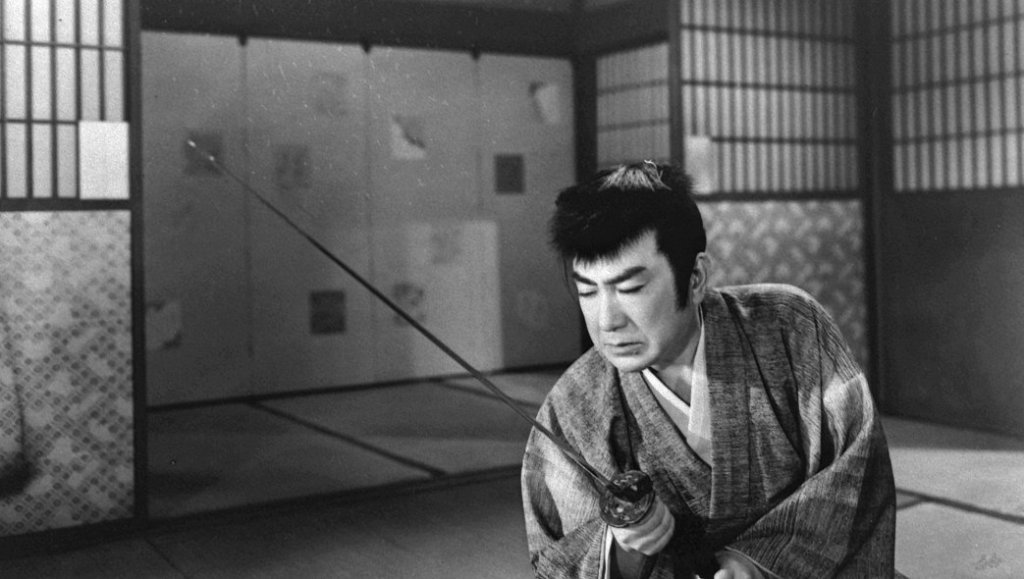
In Kabuki and Japanese folklore cursed swords lead their owners to commit murders. In Dai-bosatsu tōge it is Ryūnosuke himself who is cursed.
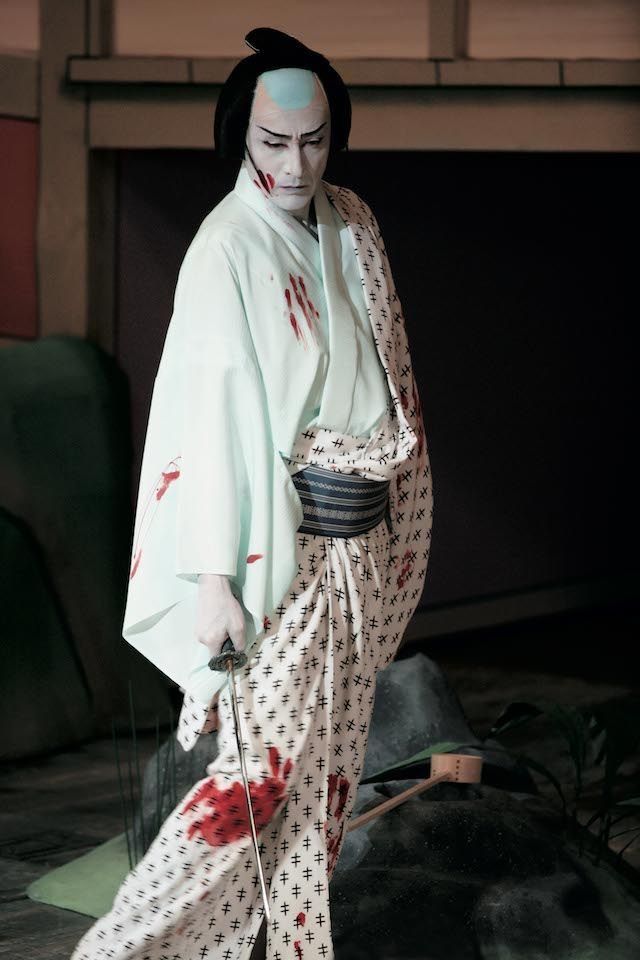
© Shochiku Co., Ltd.
Next Week: The descent into darkness begins. Join me as I look at Part 1 of Tomu Uchida’s Dai-bosatsu tōge.
- Furuya, Daniel M. “The Fabulous Samurai Swordfight: Part II.” The Fight Master 6, no. 1 (January 1983). https://mds.marshall.edu/fight/19.
↩︎


Leave a comment