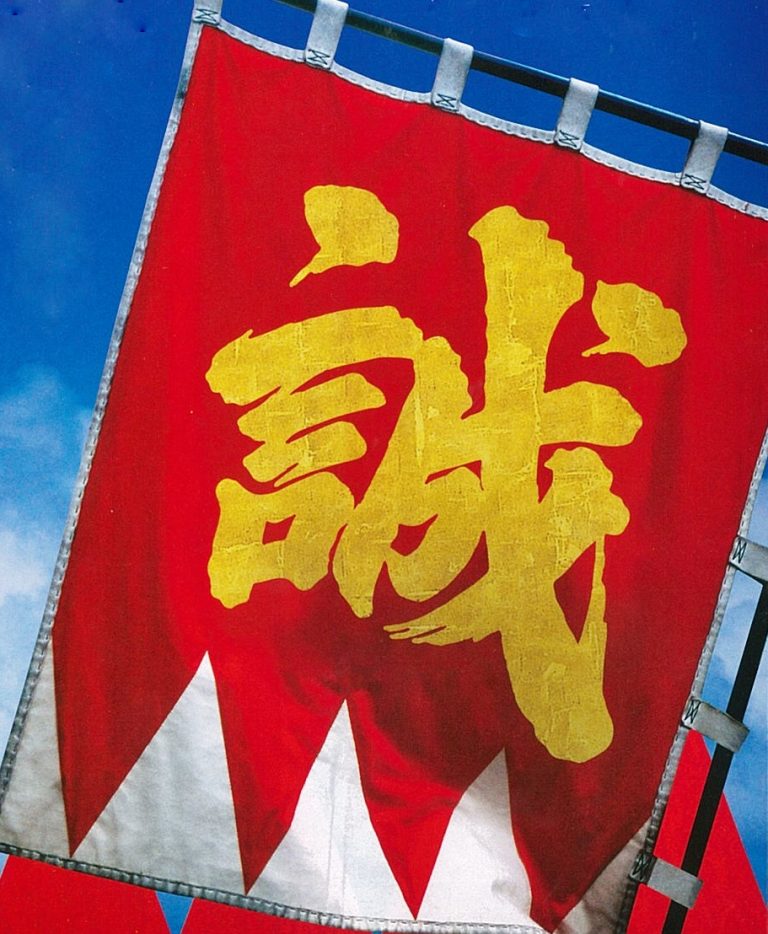
Lots going on this month. It’s my birthday month, for starters. July in Japan is very festive too. Folks have all sorts of seasonal festivals they can attend. There’s Tanabata on the 7th of July, marking the reunion of Orihime and Hikoboshi, two celestial lovers who meet only once a year. The Gion Matsuri is currently underway in Kyoto and continues through the end of July.
Speaking of Kyoto, I’ve spent the last week or so in the custody of Kyoto’s secret police.
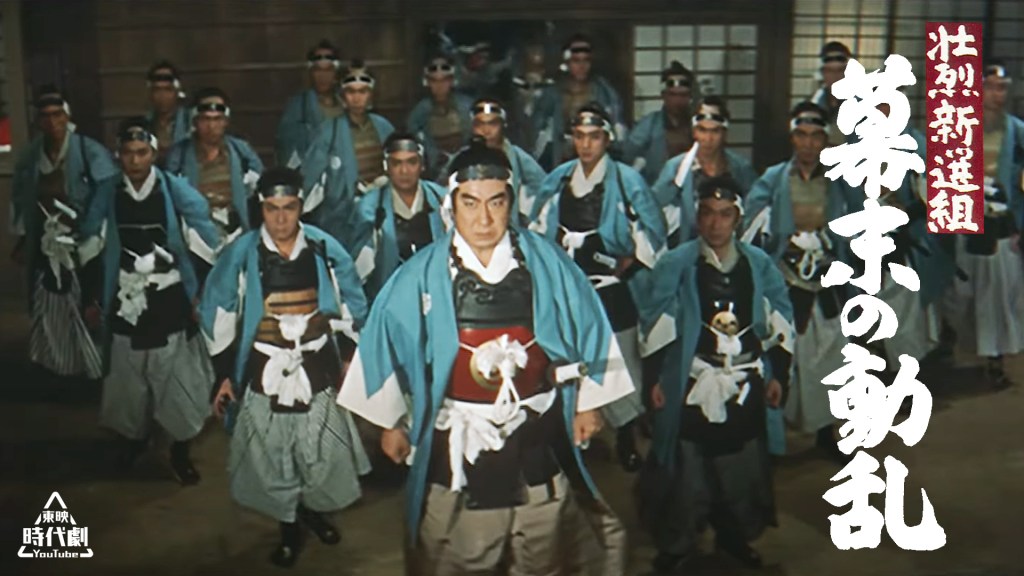
(Don’t worry, I’m fine.)
If you follow Japanese accounts on social media you can see clips of the Gion Matsuri in progress. Gion-bayashi, the traditional festival music, is everywhere. The music has a slow and hypnotic tempo, yet whenever I hear it my pulse quickens. That’s because Gion-bayashi provides the musical accompaniment to one of the best action sequences ever filmed. I’ll get to that in a moment.
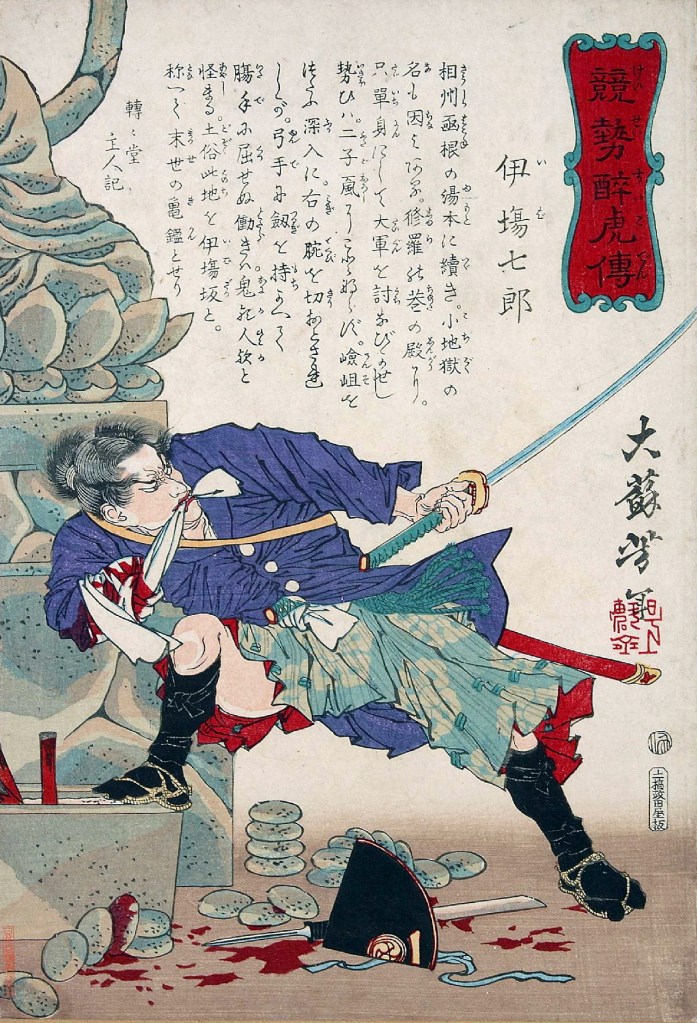
The Shinsengumi were a secret police force during the tumultuous period preceding the downfall of the Tokugawa shogunate.
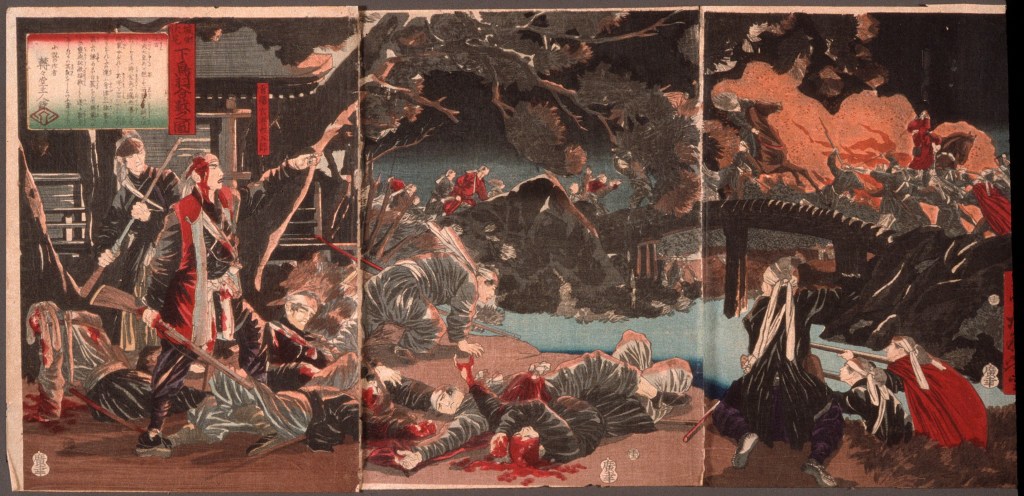
The Battle of the Lower Toba at Fushimi in Yamashiro Province
Los Angeles County Museum of Art
Herbert R. Cole Collection
© Museum Associates / LACMA
Tokyo Metropolitan Library
The Shinsengumi and their leader Kondō Isami have been popular subjects for jidaigeki since the silent period. More than 100 films have been made about the Shinsengumi. For today’s post I selected three movies produced by Toei. I’ve seen reviews criticizing these films for the liberties they take with the historical record. When it comes to Shinsengumi movies, the most important question to ask is not ‘Is the film historically accurate?’ but rather ‘Is Chiezō Kataoka playing Kondō Isami?’
Chiezō Kataoka plays Kondō Isami in all three of today’s films. You may be thinking that’s a lot. Indulge me, it’s my birthday!
Shinsengumi Oni Taicho (Shinsengumi’s Devil Commander / Fall of the Shogun’s Militia) (1954)
Directed by Toshikazu Kono
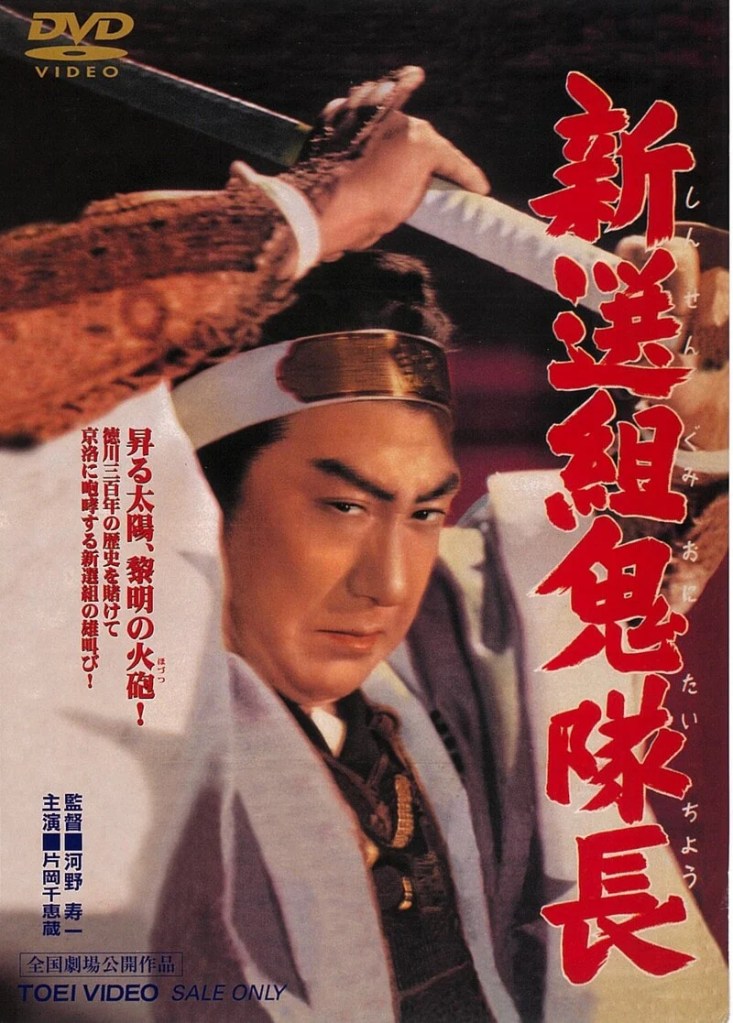
The first film is the oldest and by far the best of the three. It’s shot in black and white. You can watch it for free via the Internet Archive. I urge you to do so at your earliest opportunity because this is both an excellent movie AND peak Chiezō.
July 1864. We open with the Gion festival at night. Kondō Isami leads a group of men from the Shinsengumi through the streets of Kyoto. Crowds part in fear at their approach. The men stop outside the Ikedaya Inn where anti-shogunate forces are holed up. Kondō walks inside and all hell breaks loose.
This is the earliest action sequence I’ve seen that uses a protagonist moving calmly and implacably through chaos as he just freaking demolishes everyone in his path. Samurai dash frantically around the inn like rats in a cage. Kondō Isami goes from room to room methodically executing his foes while the Gion festival music plays outside. Every single component of this sequence is impeccable: stunts, choreography, editing, lighting, sound, and Chiezō at the top of his game. And we’re still only a few minutes into the first act!
I alluded to this film in a post I wrote last year exploring masculinity in Japanese period dramas. Shinsengumi Oni Taicho depicts a relationship between an older man and a beautiful youth who meets a tragic end. 22 year-old Nakamura Kinnosuke plays the young samurai, Okita Sōji. Kinnosuke is not only gorgeous to look at but a wonderful actor, and he has fantastic chemistry with Chiezō. Chiezō’s character loves him. Is his attachment paternal, or something else? This is a film from 1954. Anything you want to read into their relationship is up to you.
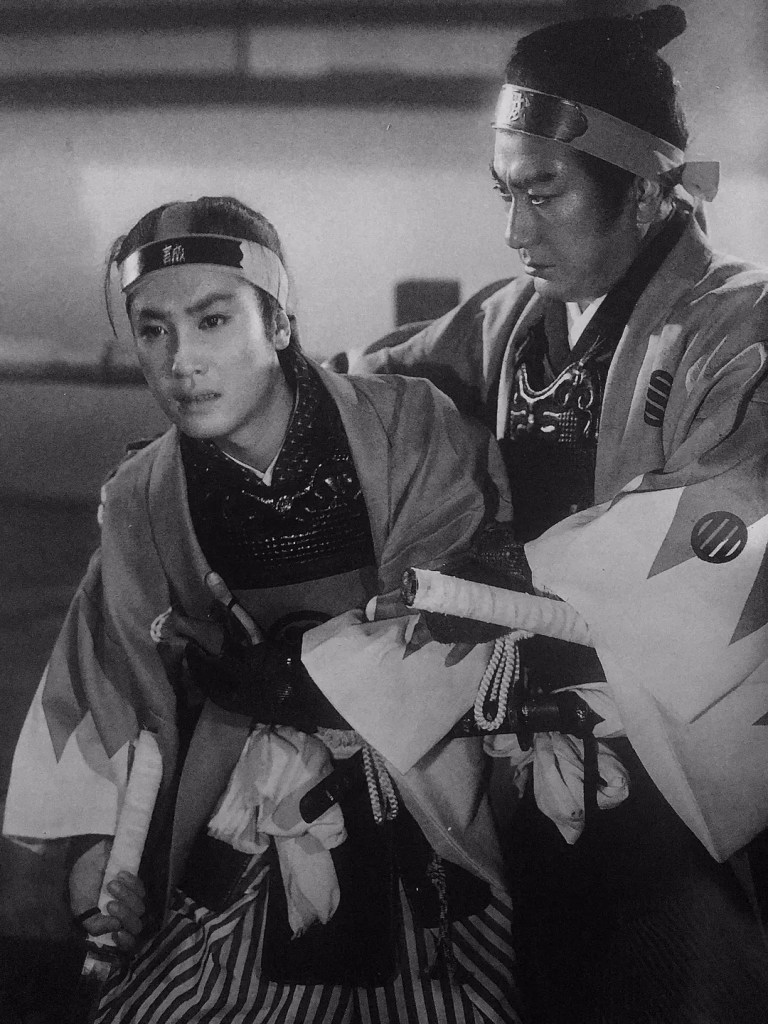
The movie’s version of Kondō is a fierce warrior who has a compassionate side as well. Chiezō Kataoka was 51 here and quite a bit older than the character he portrays— Kondō Isami was only 34 years old at the time of his death. The age difference gives his relationship with Kinnosuke’s character an extra piquancy. Those of you who are into ‘daddy’ types will enjoy the movie on a whole different (most likely unintentional from the filmmakers’ point of view) level.
Shinsengumi Oni Taicho portrays the story of the Shinsengumi as essentially a tragic/heroic one. For alternative and/or less idealized takes, look for films made later such as Shinsengumi shimatsuki (Shinsengumi Chronicles) (1963) or Shinsengumi: Assassins of Honor (1969). Nagisa Ōshima’s final film Taboo (1999) explores the subversive theme of homosexual relationships amongst members of the Shinsengumi. I haven’t seen this but it sounds fascinating and apparently has some basis in fact.
Truth and drama don’t always work well together. When it comes to movies based on historical events I judge whether films work as films. I’m not an historian. Shinsengumi Oni Taicho is not a documentary. It plays fast and loose with the facts. If you are a stickler for historical accuracy the next two films will make your head explode.
Shinsengumi (The Shogun’s Guard, Shinsengumi) (1958)
Directed by Yasushi Sasaki
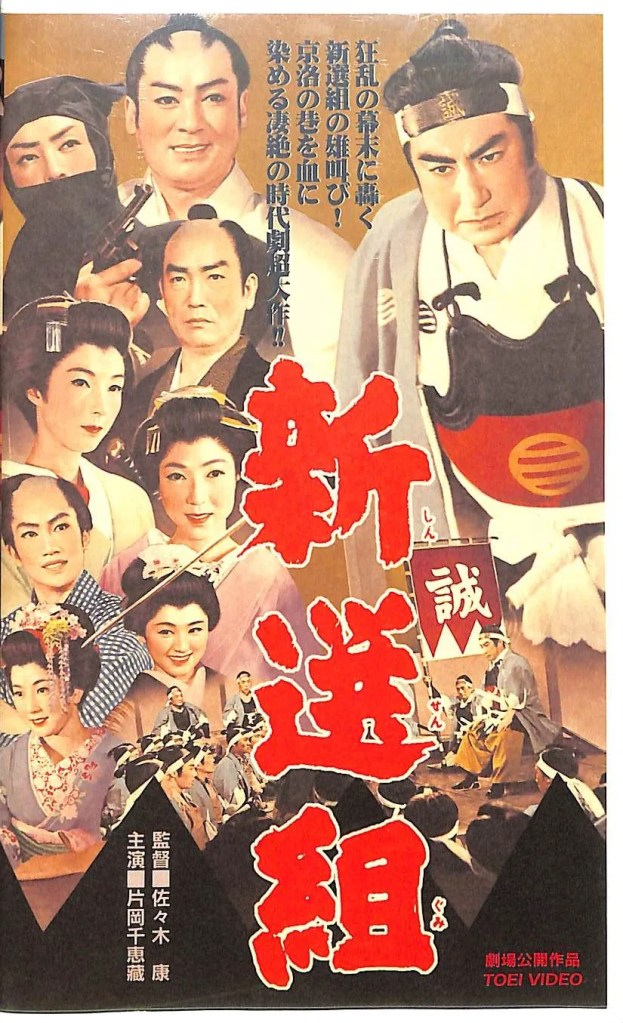
A color widescreen variation of the raid on the Ikedaya Inn that we saw at the beginning of Shinsengumi Oni Taicho awaits you, but it’s at the end of the movie rather than the beginning. In a device sure to infuriate purists, fictional characters like Kurama Tengu mingle with historical figures in the film’s universe. Kurama Tengu is the dude in the black hood with the gun on the poster above, and he’s played by Chiyonosuke Azuma. He prowls around the countryside at night on horseback doing the 19th century equivalent of drive-by shootings on samurai.
Another common complaint amongst reviewers is that most of the members of the Shinsengumi appear to be within firing range of retirement when in reality they were young men. My response is that this is a movie. It creates its own reality. Chiezō Kataoka’s presence is timeless and indelible, and he lends much needed gravitas to the film.
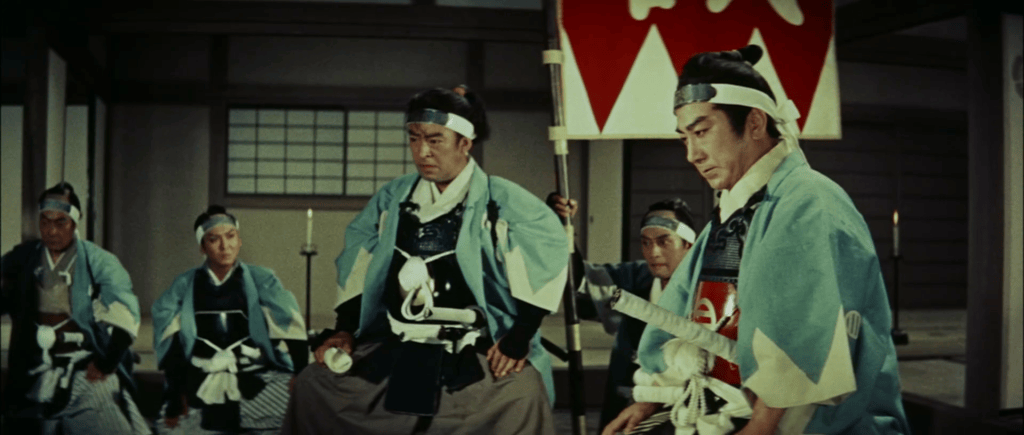
As the movie opens we meet Shinsengumi who appear to be no more than low-level thugs and bullies. Kondō Isami restores discipline and uncovers a plot to overthrow the shogun and destroy Kyoto by a faction of disaffected former Shinsengumi led by sinister Choshu spy Seki Hyōgo (Ryūnosuke Tsukigata). They plan to blow up Kyoto! Only Kondō and the Shinsengumi can save the city from burning to the ground.
The climactic raid on the Ikedeya Inn is not quite a shot-for-shot remake of the opening scenes of Shinsengumi Oni Taicho. That sequence has much better pacing, and the addition of conventional background music here is not an improvement. Chiezō in house-clearance mode is still entirely awesome, however, and this time around he gets to face off against his perennial nemesis and off-screen buddy Ryūnosuke Tsukigata.
Isao Yamagata is great as Hijikata, Vice Commander of the Shinsengumi. He’s a real hothead country samurai here. The rest of the characters are fairly thinly written. Yumiko Hasegawa plays Kondō’s mistress and has very few scenes, which seems a waste of her talents. I’m sorry to say that I am not a fan of Ryūtarō Ōtomo, and his performance in this film does nothing to dissuade me of that. He has all the ingredients for an action star, yet he always leaves me cold. I’m not really sure why. (I read a comment from a viewer in Japan that Ryūtarō Ōtomo wields a sword like a machete, and now I can’t unsee it.)
We get to see Chiezō chilling in an onsen, or rather a studio replica of an onsen, which probably was not a pleasant experience to shoot.
The highlight of the film is a sequence in which Seki Hyōgo resigns from the Shinsengumi. Hijikata isn’t happy that Seki has been allowed to walk away with impunity. Hijikata can’t go against his commander’s orders, but he can let everyone know how he feels about it. He’s like fuck this and suddenly announces that he will perform a dance as a parting gift. Kondō says he will sing the accompaniment. The dance is Hijikata’s way to let Seki know that he knows. He glares at Ryūnosuke Tsukigata as if he’s going to kill him. His movements are so aggressive that Seki reaches for his sword.
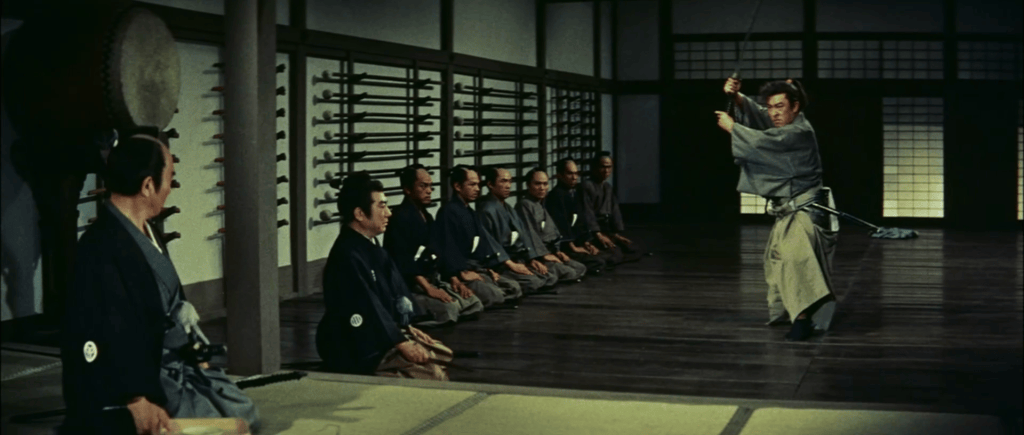
In the course of the film Kondō Isami comes to realize that he and the Shinsengumi are on the wrong side of history. He wants a peaceful united Japan and a dignified exit for the shogun. At one point Kondō tells Hijikata, “If we keep killing everyone people will hate us.” Well, duh.
Shoretsu Shinsengumi – Bakumatsu no doran (Shinsengumi: Last Days of the Shogunate / The Valiant Shinsengumi: Turmoil of the Late Edo Period / The Shogun’s Guard: Valor in Turbulence) (1960)
Directed by Yasushi Sasaki
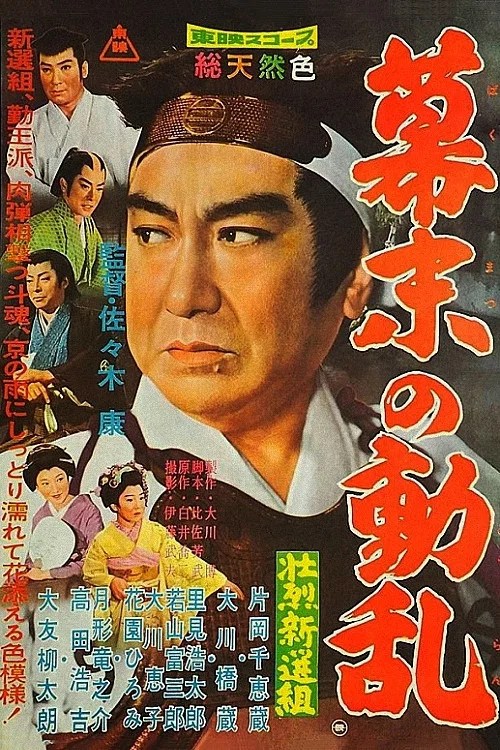
With an evidently lavish budget and star-laden cast Shoretsu Shinsengumi – Bakumatsu no doran should have been a slam-dunk. Unfortunately what starts out as a promising albeit fictionalized history of the Shinsengumi from their inception as rōnin turns into a sluggish melodrama in which they seem almost superfluous. It’s like the writers just wedged a standard jidaigeki plot into a Shinsengumi frame.
The problem with all-star extravaganzas is that great actors can get lost in the crowd. Okita Sōji is played by Tomisaburō Wakayama, yet he is given little to do. It’s a shame, especially as Wakayama was such a talented swordsman. He’s not an androgynous beauty like the young Nakamura Kinnosuke, but Tomisaburō Wakayama is actually quite svelte and sexy in this.
Hashizo Ōkawa plays Tajima Orinosuke, a young and rather naïve samurai in league with pro-imperial/anti-shogunate forces who nevertheless comes to Kondō’s aid in the last act.
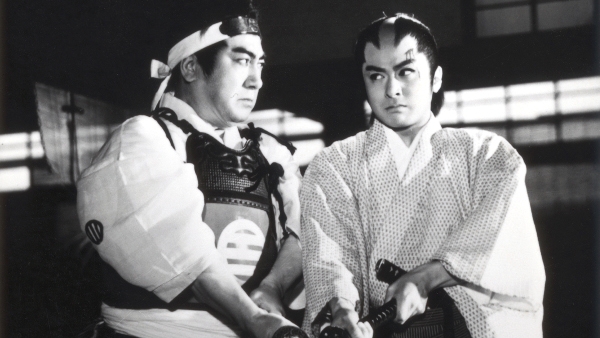
Isao Yamagata is Serizawa Kamo. After playing Hijikata two years prior he’s back in villain territory here. His character is a corrupt and ruthless samurai with a drinking problem. Ryūnosuke Tsukigata is back as well. He plays Itō Kashitaro. He doesn’t really do much until the last third of the film in which he betrays Kondō and defects from the Shinsengumi to the Loyalists. Ryūtarō Ōtomo returns as another Loyalist sympathizer, Kurahara Shinbei. He’s armed with a revolver. Also appearing is Kogiku Hanayagi as Ocho, a spy. She always looks so chic.
Two of the Shinsengumi with criminal backgrounds turn to armed robbery. They break into a house in Kyoto, identifying themselves to their victims as Loyalists. Serizawa blackmails them into giving up the loot in return for which he will keep their felonious activities secret. He encourages them to commit more robberies and to perpetuate the rumor that their crimes are the work of the Loyalists.
Serizawa stabs Ocho who has been spying on him and his contingent of dirtbags. Before she dies she reveals to Kondō that Serizawa is to blame. Kondō meets Serizawa on the street in a nocturnal showdown and kills him.
At just over an hour in we finally get some decent sustained action with the raid on the Ikedaya. It’s not as good as the raid in Shinsengumi Oni Taicho, but it’s not bad, and Chiezō does his thang to lethal effect.
Several not very interesting plot developments later, Itō Kashitaro orders a hit on Kondō. Kondō is shot as he is riding his white horse. A classic Chiezō versus Everybody fight ensues. Chiezō as Kondō Isami is the only samurai in Japan who can fight off fifty guys while suffering massive blood loss:
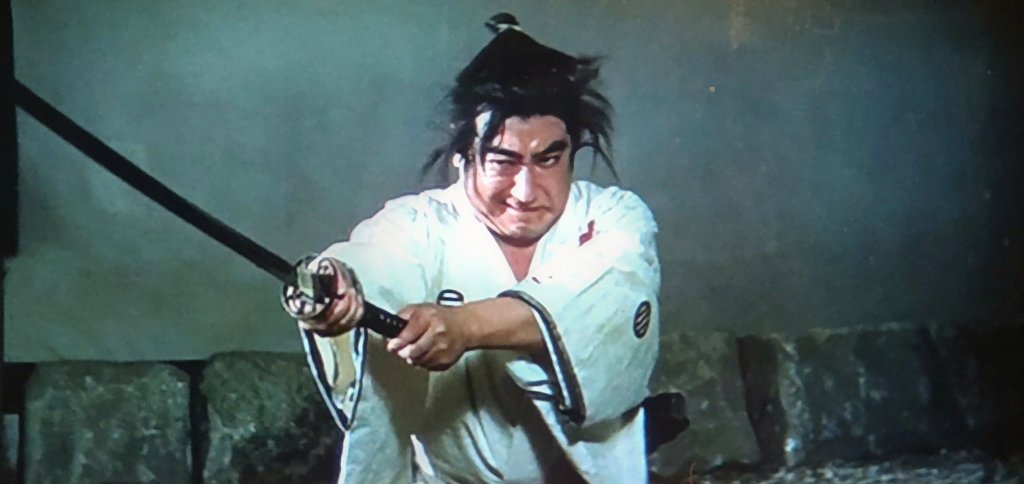
Just when things look darkest for our hero, Kurahara and Tajima Orinosuke arrive in the nick of time to lend a hand. Kondō uses his last ounce of remaining strength to whack Itō:
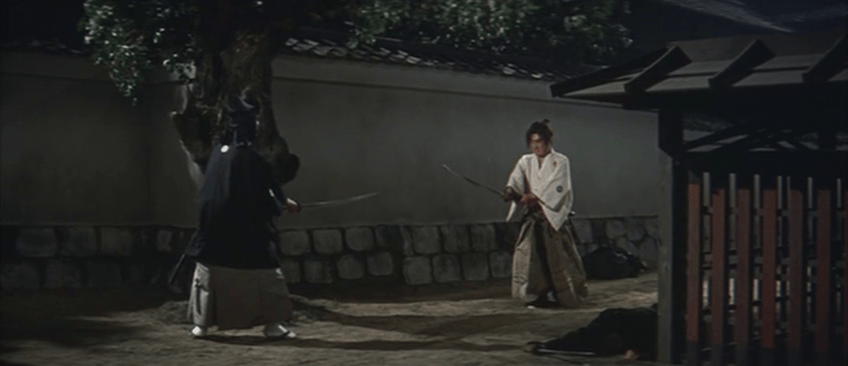
With all the bad guys taken down, Kondō Isami rides off on his white steed to fight another day.
Shoretsu Shinsengumi – Bakumatsu no doran is the odd one out of the three films under discussion today because it doesn’t seem like a Shinsengumi movie. Much of the plot could exist without them. The film as a whole could use a merciless edit. There’s too much running around and too many scenes with the little girl (Chiezō Kataoka’s daughter Chie Ueki), who is admittedly very cute:
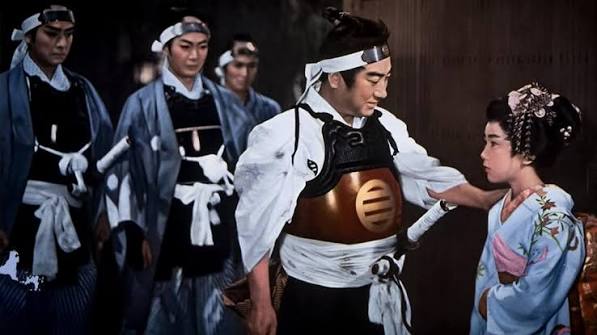
Why a cute kid is in a Shinsengumi story to begin with is symptomatic of a wider issue. Contrast the lean mean feel of Shinsengumi Oni Taicho from six years earlier with this, and the problem becomes all too evident. Most of the films Chiezō made at Toei during this period are unabashed old-fashioned star vehicles. They can get a little hokey. I can’t hate on them, even if I wish that their scripts were better.
Dai-bosatsu tōge (1957 – 1959) and Ishin no kagaribi (1961) also belong to the Shinsengumi sub-genre of jidaigeki. While I have not yet had a chance to write in depth about the former, the latter was the subject of one of my previous posts. Ishin no kagaribi is that rare thing: a period drama in which Chiezō actually gets to have a normal intimate relationship with a woman whom he does not end up murdering. Sparks fly when Shinsengumi’s fearsome Vice Commander Hijikata Toshizō meets elegant Kyoto widow Ofusa (Chikage Awashima). I love a romance between a sexy rough-around-the-edges man and a refined woman: think Clark Gable and Claudette Colbert in It Happened One Night, or Marlon Brando and Eva Marie Saint in On The Waterfront, Marlon Brando and Jean Simmons in Guys and Dolls, Marlon Brando and … you get the idea. See approximately 27,000 other Hollywood movies for more examples of this classic bad boy/good girl dynamic. Pair Ishin no kagaribi with Shinsengumi Oni Taicho and you’ve got your very own Shinsengumi-Fest.


Leave a Reply